

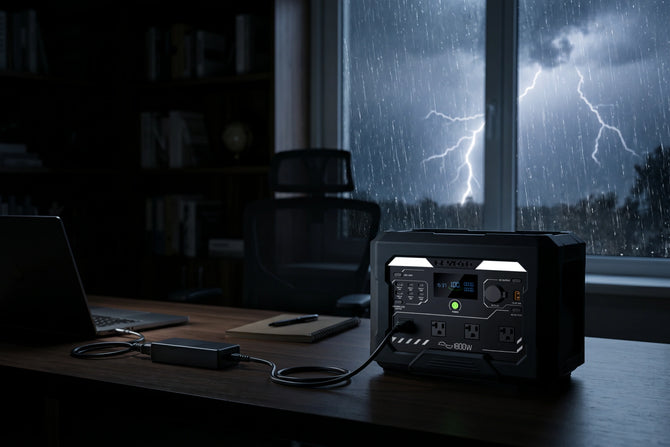




Why This Matters Right Now: The 2026 Hurricane Season
The 2026 Atlantic hurricane season runs June 1 through November 30, with its historical peak arriving mid-September into October. NOAA's Climate Prediction Center is forecasting 8 to 14 named storms this year, with 3 to 6 becoming hurricanes and as many as 3 reaching major, Category 3+ strength. NOAA's own outlook leans toward a below-average season overall — but as the agency's National Weather Service leadership has pointed out, even a quiet season only needs one direct hit to make life very difficult for the household in its path.
That's the entire case for charging a home backup power station now, while the season is still building toward its peak, rather than waiting for a storm watch. Once a hurricane warning goes up, store shelves empty of batteries, water, and fuel within hours — and a power station with a half-charged battery does nothing for your fridge or CPAP machine at 2 a.m. during an outage. Topping off the N1000 today means it's simply sitting there, ready, whenever your area's turn comes.
Power Profile: Capacity, Output, and Real-World Performance
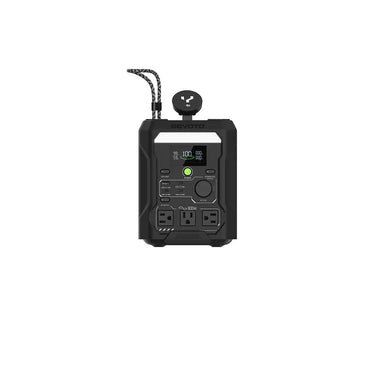
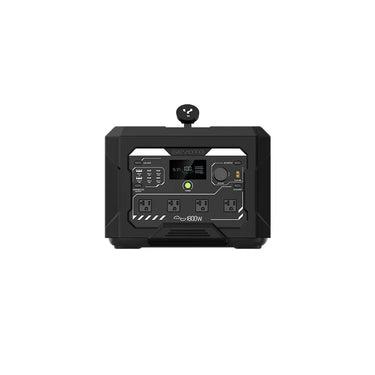
The GEYOTO N1000 was engineered to cover your household's essential loads — food safety, connectivity, and medical devices — with numbers you can actually count on.

Steady Output & Surge Handling
A reliable portable power station for a power outage must do more than charge phones; it needs to start and run demanding equipment. The N1000 delivers 1800W of continuous pure sine wave output, with a 2400W constant power mode for the extra headroom that motors and compressors need during startup. Its pure sine wave inverter delivers clean, stable electricity that's safe for laptops, CPAP machines, and other sensitive electronics.
- 1800W Continuous Output: Steady, stable power for hours of essential-load backup.
- 2400W Constant Power Mode: Extra headroom to absorb the startup spike from compressors and pumps.
- Pure Sine Wave Inverter: Safe for laptops, CPAP machines, and smart devices.
What Can It Run? (Appliance Performance Breakdown)
You don't need a massive, permanently installed generator to maintain essentials during an outage. Here's what the N1000's 1024Wh battery can realistically support.
| Household Appliance | Typical Running Watts | Estimated Runtime on N1000 (1024Wh) |
|---|---|---|
| Medical CPAP Machine (humidifier off) | 40W – 80W | ~11–22 hours (about 2–3 nights per GEYOTO's CPAP sizing guide) |
| Home Wi-Fi Router & Modem | 15W – 30W | ~29–58 hours |
| Full-Sized Refrigerator | 200W – 400W | ~2–4+ hours of continuous compressor run time; since fridges cycle on and off rather than running non-stop, real-world coverage is typically longer — see our refrigerator backup guide below |
| Sump Pump (1/3 HP) | 800W | ~1 hour of continuous run time; intermittent cycling extends total elapsed backup time |
| Microwave Oven | 1000W | ~52 minutes of continuous use, or roughly 10 short (5-minute) uses |
Whether you need backup for food safety, a Wi-Fi connection during a storm, or overnight power for a CPAP machine, the N1000 is sized and rated for real essential-load use — not a whole-house promise it can't keep.
(Actual runtime varies with device efficiency, temperature, and usage pattern — these are planning estimates, not guarantees.)
Next-Generation LiFePO4 Chemistry: Built to Last
When you buy a portable power station for home backup, you need to know it will work when the lights go out — and keep working, year after year. The N1000 uses next-generation Lithium Iron Phosphate (LiFePO4 / LFP) battery chemistry.
Why Battery Chemistry Matters
Older portable power stations often rely on standard Lithium-ion (NMC) cells, which degrade quickly under heavy use. LiFePO4 cells offer meaningfully longer service life, keeping your backup power station ready for years.
Thermal Safety & Stability
Traditional lithium batteries carry some risk of thermal runaway if punctured or overheated. LiFePO4 chemistry is structurally and chemically more stable, and the N1000 is UL Certified, with an advanced Battery Management System (BMS) that protects against overcharging and short circuits.
- UL Certified & LiFePO4 Safe — independently verified safety, not just a marketing claim.
- Advanced BMS: Built-in protection against overcharging and short circuits.
- Fire-Retardant Housing: UL94 flame-retardant silicone protective cover.
A Decade-Class Investment
| Battery Metric | Standard Lithium-Ion (NMC) | GEYOTO N1000 (LiFePO4) |
|---|---|---|
| Lifecycles (to ~80% capacity) | 500 – 800 cycles | 4,000+ cycles |
| Estimated Lifespan | 2 – 3 years | Up to 10 years¹ |
| Safety Profile | Moderate | UL Certified, LiFePO4 |
By choosing LiFePO4 technology, the N1000 is rated for over 4,000 charge cycles to 80% capacity — meaning it retains the large majority of its original capacity for years of regular storm-season use.
Lifespan estimate based on GEYOTO's internal simulation; actual results vary by usage conditions.
Every N1000 also ships with a 3-year standard warranty, extendable to a full 5 years by registering as a GEYOTO member, plus a 30-day money-back guarantee — so the 10-year investment is backed by a real commitment, not just a spec sheet.
Ultra-Fast Recharging: Less Downtime Before and During Storms
When a storm is tracking toward your neighborhood, every minute counts. The N1000 is built so you're rarely caught with a half-charged battery.
Hyper-Fast AC Wall Charging
The N1000 charges from 0–80% in about 43 minutes and to a full 100% in about 68 minutes, using the included fast-charging adapter plugged into any standard household outlet.² That's roughly a third of the time a typical 500W charger would take. This rapid turnaround means your N1000 can be topped off before a storm arrives — or partially recharged during a brief return of grid power between outages.
Fast-charging speeds require the included AC adapter; charging with a different or lower-power adapter will be slower.

Click the image to shop now
Solar Generator Integration
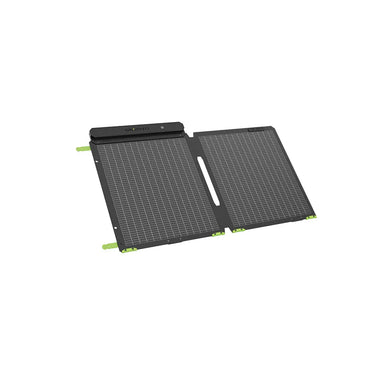
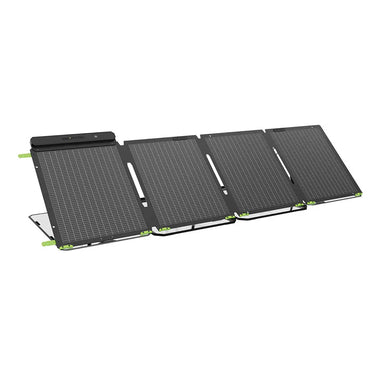
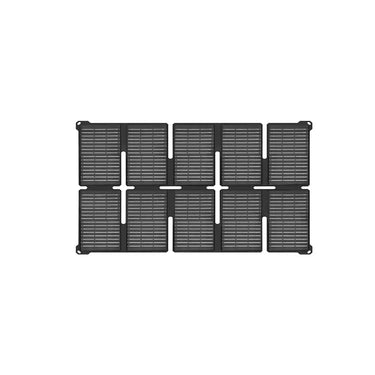
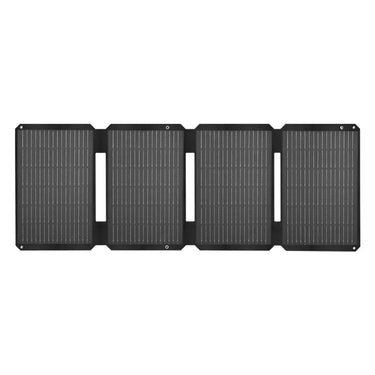
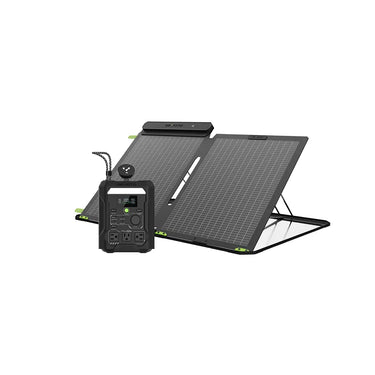
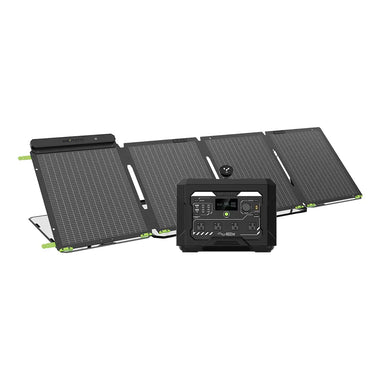
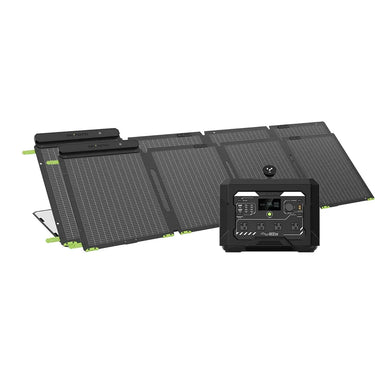
If the grid stays down for days, wall outlets won't help. That's where solar charging comes in. The N1000 accepts up to 800W of solar input, and pairs with GEYOTO's S200 200W bifacial solar panels:
1 panel: recharges the N1000 in about 5.7 hours
2 panels: about 2.8 hours
4 panels: as fast as 1.5 hours
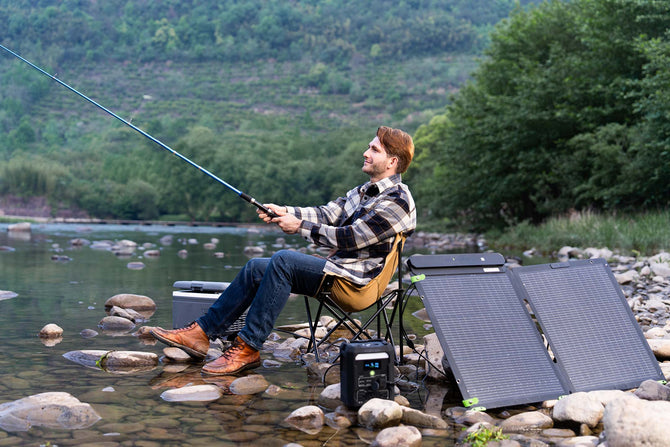
Continuous Power: Keep critical electronics running during extended blackouts.
Off-Grid Independence: Turn your N1000 into a self-sustaining backup source between outages.
For a full breakdown of watts, watt-hours, and solar charging math, see our portable power station buying guide.

Click the image to shop now
Alternative Recharging Layouts
| Recharging Method | Best Used For | Convenience |
|---|---|---|
| Car Auxiliary Port (12V/24V) | Recharging on the move or while sheltering in a vehicle | High flexibility during evacuations |
| Solar Panels (S200, up to 800W input) | Extended outages with no grid access | Off-grid, renewable |
| Dual Charging (AC + Solar) | Combining wall power and solar simultaneously | Fastest possible replenishment |
Simple Setup & UPS Functionality
You need a home backup power station that fits into daily life without an electrician or a permit.
Uninterruptible Power Supply (UPS) Mode
A sudden blackout can corrupt unsaved files or interrupt medical equipment. The N1000's built-in UPS mode monitors your wall outlet and switches to battery power in under 10 milliseconds — fast enough that a connected computer, router, or CPAP machine won't even notice the switch.
- 24/7 Monitoring: Constantly watches your AC input.
- <10ms Switchover: Fast enough to protect sensitive electronics and medical equipment.
- No Flicker: Your router stays online and your devices keep running.
Plug-and-Play — No Electrician Required
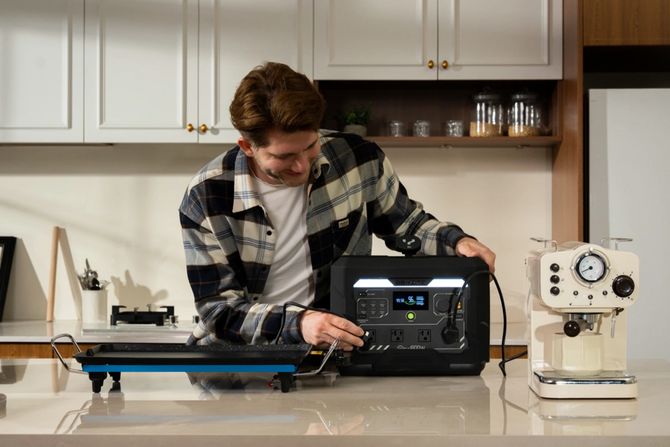
Unlike whole-home battery systems that require a licensed electrician, a transfer switch, and sometimes permitting, the N1000 is designed to be entirely plug-and-play: charge it, carry it where you need it, and plug your essentials directly into its outlets. There's no installation cost, no wiring work, and no downtime waiting on a contractor.
If your long-term plan includes integrating whole-circuit backup into your home's breaker panel, that requires a licensed electrician and hardware rated for that purpose — the N1000 is designed and rated for direct, plug-in essential-load backup rather than whole-panel integration. We'd rather tell you that up front than have you find out the hard way.
Smart Control, Certified Safety, and Rugged Portability
Real-Time LCD Display & App Monitoring
Managing your backup power shouldn't be a guessing game. The N1000's LCD screen shows battery percentage, live input/output wattage, and estimated remaining runtime at a glance. The GEYOTO app extends that visibility to your phone, letting you monitor charge level and toggle ports from anywhere in the house.

Certified, Rugged Housing
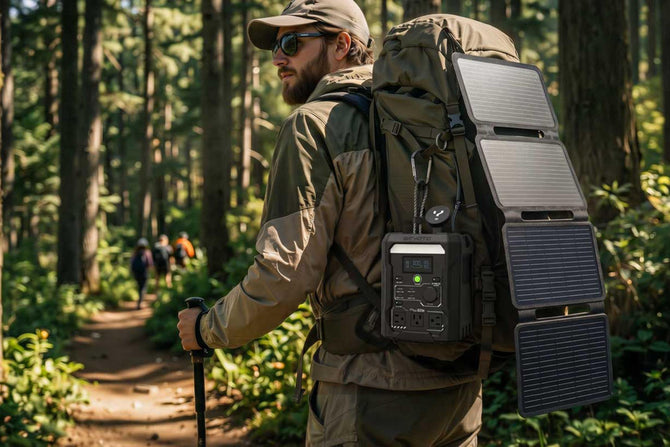
The N1000 pairs a UL94 flame-retardant silicone protective cover with an impact-resistant shell, and is UL Certified for safety — independent verification, not just a marketing claim. A smart dual-fan cooling system manages airflow automatically, keeping internals cool under load while staying quiet at typical household output levels.
Diverse Multi-Port Architecture — 18 Ports Total
The N1000 offers 13 output ports (18 total including inputs) so you can power multiple devices at once without adapters:
- AC Outlets: Pure sine wave power for major appliances and sensitive electronics.
- USB-C PD 3.2 140W Ports: Fast enough to charge laptops and drones roughly 40% faster than standard 100W USB-C.
- USB-A Fast Charge Ports: Reliable power for everyday gadgets.
- 12V DC Car Socket: Direct DC power for coolers, routers, and select medical equipment.
- Foldable Qi2.2 25W Wireless Charging Pad: Cable-free phone charging built into the unit.
Backed by a Real Warranty
Every N1000 includes a 3-year standard warranty, extendable to 5 years total by registering as a GEYOTO member, plus a 30-day money-back guarantee and free shipping from a US warehouse — so you're not just trusting a spec sheet, you're backed by a real commitment.
Frequently Asked Questions
Can the N1000 run a whole house?
No. Like any portable power station in this capacity class, the N1000 isn't a replacement for a whole-home standby generator or a multi-circuit battery system. It's designed to keep your highest-priority essentials running — refrigerator, Wi-Fi router, medical devices, phones, and lights — during an outage, not to power an entire home's HVAC, well pump, and every circuit at once.
What's the difference between running watts and starting surge watts?
| Appliance Type | Running Watts | Starting Surge Watts |
|---|---|---|
| Refrigerator | 100W – 400W | 1,200W – 1,600W |
| Sump Pump | 800W | 1,300W – 2,500W |
| Coffee Maker | 1,000W | 1,000W |
Running (continuous) watts are what an appliance needs to keep operating; starting (surge) watts are the brief extra boost needed to get a motor or compressor turning. The N1000's 2400W constant power mode is built to absorb these startup spikes for typical household motors.
How long can the GEYOTO N1000 (1024Wh) run a full-sized refrigerator?
The N1000 can sustain roughly 2–4+ hours of continuous compressor draw at typical refrigerator running watts. Because refrigerators cycle on and off rather than drawing power constantly, real households typically see longer effective coverage — for a full breakdown, see our guides on what 1024Wh actually means for runtime and how long a refrigerator stays cold without power.
Is it safe to run the GEYOTO N1000 inside a living room or bedroom?
Yes. Unlike gas generators, the N1000 is UL Certified, produces zero emissions, and runs quietly — with LiFePO4 chemistry and a smart BMS to help regulate temperature.
For a deeper planning guide, see our breakdown of how long the GEYOTO N1000 lasts during a power outage for essentials, CPAP, and refrigerator backup.
How long does the N1000 hold its charge in storage?
LiFePO4 batteries are widely known throughout the industry for low self-discharge rates, meaning they lose charge much more slowly in storage than standard lithium-ion batteries. As general good practice for any LiFePO4 power station, we recommend checking the charge level periodically and topping it off every few months to maintain long-term battery health — especially before storm season, when you want it ready to go.


