

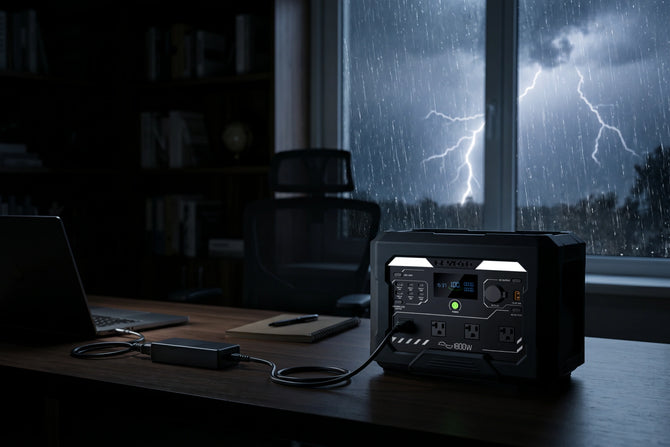




Weather emergencies rarely unfold on a convenient schedule. A tropical storm can intensify overnight; a wildfire can shift direction within hours; a winter ice event can strand entire communities for days. What separates households that manage these situations with minimal disruption from those that scramble isn't luck — it's whether they made the right decisions when there was still time to make them.
Backup power is one of those decisions. And among the available options, a solar powered emergency generator has a practical edge that fuel-based alternatives don't: it can keep restoring energy as long as the sun comes up, without depending on a fuel supply chain that's often disrupted in exactly the scenarios you're preparing for.
What "Emergency Ready" Actually Means
Most people assume that owning backup power equipment equals being prepared. In practice, there's a meaningful gap between having a unit and having one that's ready when the grid fails.
The issue is timing. When a storm warning is issued, stores sell out within hours. If your backup unit is uncharged, you may have a short window to fill it before the outage hits — or you may not. The households that come through extended outages well tend to operate on a "charged standby" principle: the equipment is maintained at full capacity as a matter of routine, not triggered by a forecast.
This shifts the question from "can I charge it in time?" to "is it already ready?" That's a fundamentally different posture, and it shapes which equipment choices actually make sense.
What to Look for in an Emergency Solar Generator
Shopping for a storm preparedness solar generator involves a few criteria that don't always get equal weight:
Capacity (Wh)
This determines how long you can run essential appliances. A refrigerator, some lighting, phone charging, and a CPAP machine can add up quickly. For most households planning multi-day coverage, 1000Wh or above gives meaningful runway.
Output Wattage
Peak output matters as much as stored capacity. Refrigerator compressors and window AC units have startup surges that can exceed their rated wattage by 2–3×. A unit that can't handle those spikes won't run them reliably.
Charge Speed
In the window between a storm alert and grid failure, fast AC charging input can mean the difference between starting with a full battery or a half-empty one. Units that support 1000W or above can reach full capacity in roughly an hour — a relevant detail when a forecast catches you off guard.
Battery Chemistry
For standby applications, LiFePO4 (lithium iron phosphate) is generally the preferred choice. It degrades less from sitting at high states of charge, handles the irregular charge/discharge pattern of emergency backup use, and carries a longer rated cycle life than alternative lithium chemistries.
Solar Input Compatibility
A unit without solar input is purely a battery — useful for short outages, but finite. One that accepts solar charging becomes a system capable of replenishing itself as long as there's daylight.
How the GEYOTO N1000 Addresses These Criteria
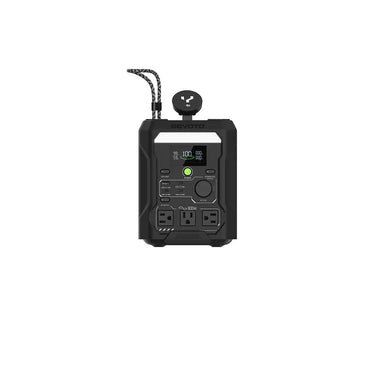
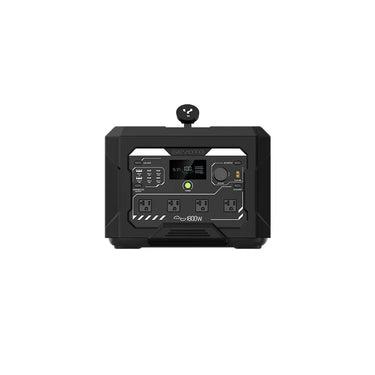
For households actively evaluating options, the GEYOTO N1000 is worth examining against each of these points specifically.
 👉 Click image to view the N1000
On capacity and output: the N1000 carries 1024Wh and delivers 1800W of AC power via a pure sine wave inverter. The pure sine wave output is relevant for compressor appliances and medical equipment — these run cleaner and last longer on grid-quality power than on the modified sine wave that cheaper units produce.
On charge speed: the N1000 accepts up to 1440W via AC input, which means a full charge from a wall outlet in roughly an hour. That's a practical advantage in the narrow window between a storm watch and an actual outage — most competing units at this capacity range take two to three times as long.
On battery chemistry: the N1000 uses LiFePO4 cells rated for 4,000+ cycles. For emergency backup use specifically, two things matter here. First, the cells tolerate being stored at full charge without significant degradation — which is exactly how a standby unit gets used. Second, LiFePO4 has a more stable thermal profile for home storage compared to other lithium chemistries, reducing risk in the environment where this equipment actually lives. The N1000 adds multi-layer active protection on top of that: overcharge, over-discharge, short circuit, and temperature monitoring all run simultaneously. A unit you're trusting during a high-stress event, potentially while the household is asleep, should have that kind of redundancy built in.
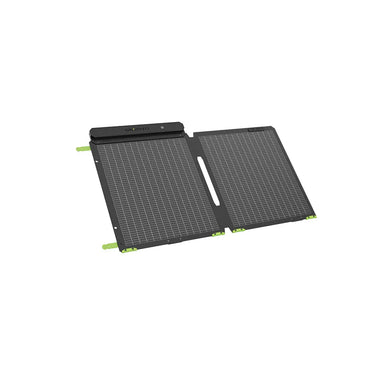
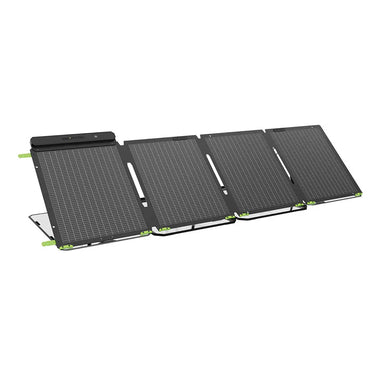
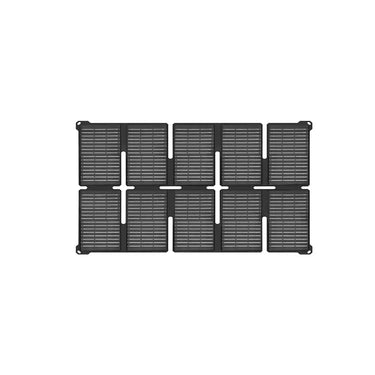
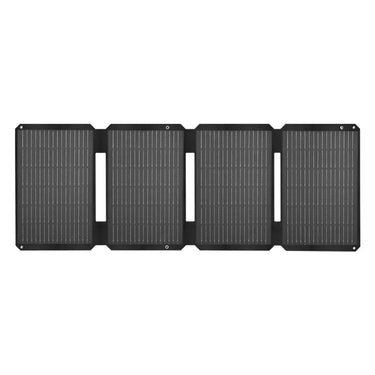
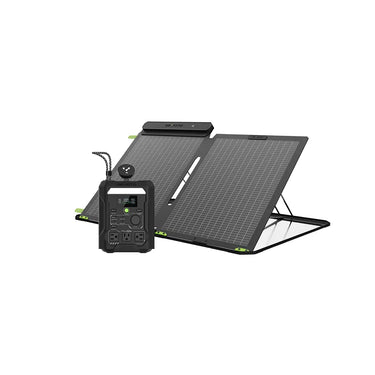
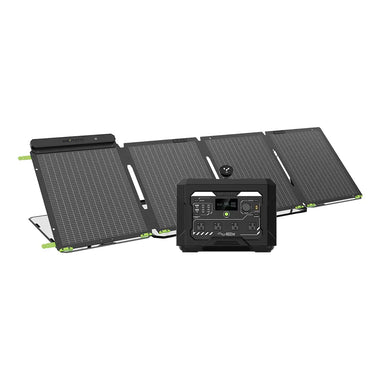
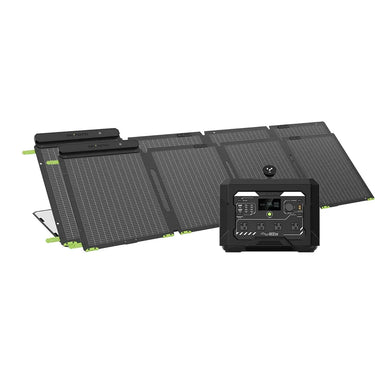
On solar input: the N1000 is available as a solar generator kit paired with one or two 200W bifacial foldable panels. Bifacial panels capture light from both surfaces, which extends effective output during the low-angle light and overcast conditions common in storm aftermath. Two panels at 400W combined input can meaningfully offset daily consumption for essential loads, turning a finite battery reserve into an ongoing power source.
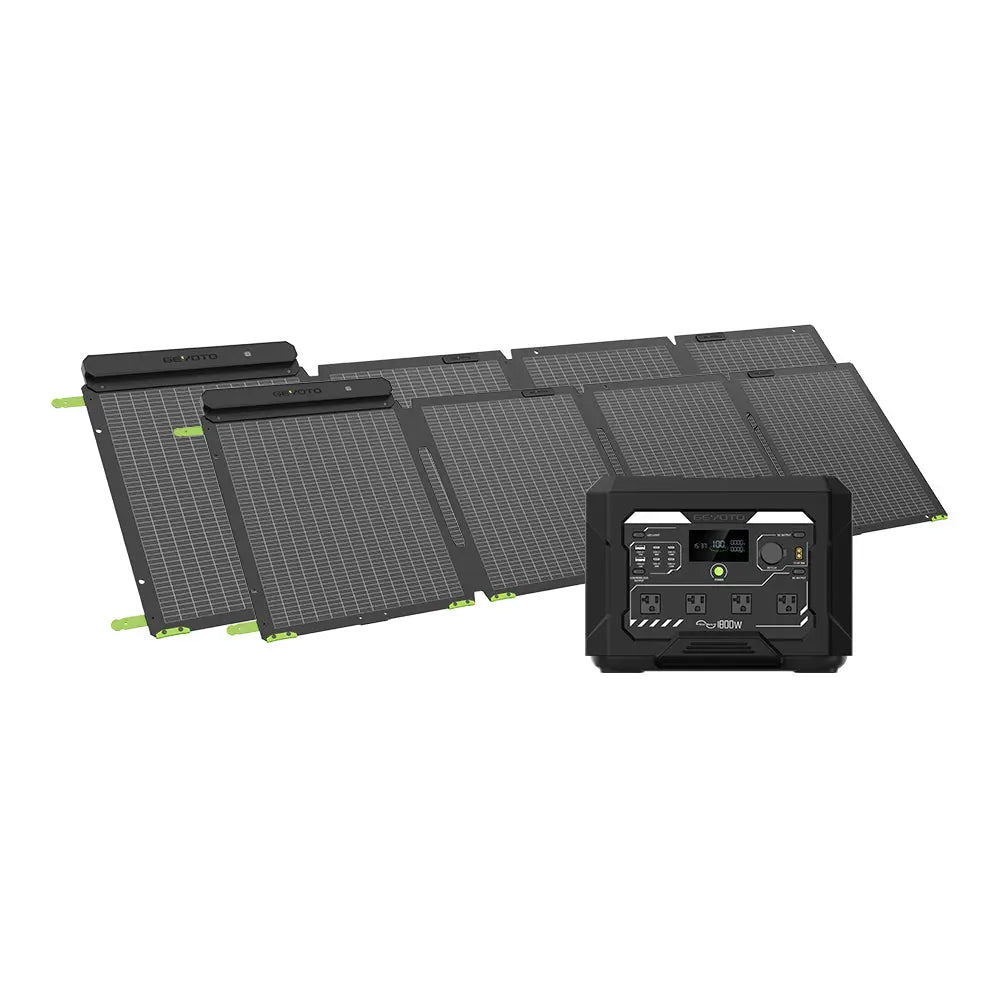
GEYOTO backs the N1000 with a 3-year standard warranty, extendable to 5 years for members — a coverage window that reflects confidence in long-term reliability for a device that may sit unused for months between emergencies.
Why Solar Recharging Matters for Extended Outages
For a one-night outage, stored battery capacity is usually enough. For the kind of extended outage that follows a major hurricane or ice storm — three to five days or longer — solar recharging shifts from a nice-to-have to a core part of the strategy.
The practical value isn't just watt-hours. It's having a daily replenishment cycle that doesn't depend on the grid or a fuel supply. A 200W panel, even in partially overcast conditions, can meaningfully extend how long essential loads keep running. Paired with a 1024Wh station, a household running a fridge, basic lighting, and device charging can stretch coverage from a single day to several — without any grid connection.
This is where hurricane power backup planning with a solar generator moves from theory to practical resilience.
Prioritizing Your Loads
Before an emergency hits, knowing what you need to power — and in what order — helps you get the most out of whatever capacity you have.
Tier 1 — Non-Negotiable
Medical devices, refrigerated medication, communications. These come first, no exceptions.
Tier 2 — High Value
Food refrigeration, basic lighting, phone and device charging. High value, moderate draw.
Tier 3 — Conditional
Window AC, electric kettles, other high-draw appliances. Run these when capacity allows, not at the expense of Tier 1 and 2.
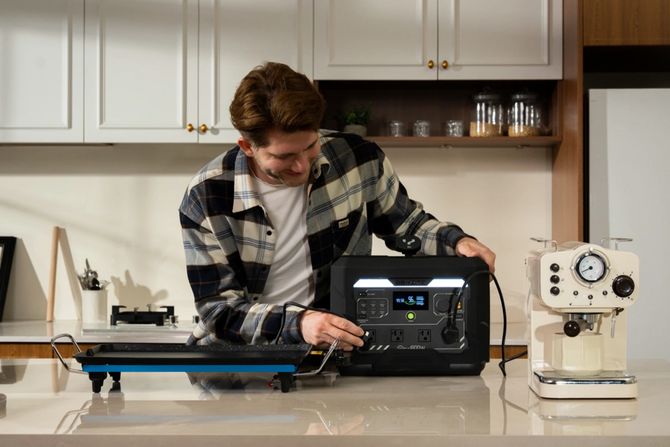
With 1800W of output and multiple port types, the N1000 can handle several of these loads simultaneously — but deciding the priority order in advance prevents the common mistake of running the battery down on lower-priority devices in the early hours of an outage.
A Simple Pre-Season Routine
Emergency preparedness doesn't require elaborate systems. A few consistent habits close the gap between "equipment owned" and "equipment ready":
01
Maintain a full charge heading into storm season.
Don't rely on last-minute charging when a watch is issued.
02
Stage your solar panel before conditions deteriorate.
If an outage starts overnight, having the panel positioned means recharging begins at first light rather than after setup.
03
Run a brief test before hurricane season.
Confirm outputs work, connections are solid, and the unit holds charge as expected.
04
Know your runtime estimates in advance.
Running those numbers for your fridge and critical equipment before an event removes the guesswork when you actually need the information.
Making the Decision
A solid best solar generator power outage setup doesn't need to be complicated — but it does need to match your specific household's load requirements, tolerance for outage duration, and storage situation.
GEYOTO's emergency scenario page breaks down how the N1000 applies across common emergency contexts. The N1000 product page covers full specifications, solar kit configurations, and warranty details for anyone doing a final pre-purchase evaluation.
The goal isn't to have the most equipment. It's to have the right equipment, already charged, before the storm arrives.


