



A good fishing trip often starts before sunrise and ends after the light fades. Your phone handles navigation, your fish finder helps read the water, your camera captures the catch, and your lights keep the setup usable after dark. When the trip runs long, power becomes part of the plan.
A small power bank may be enough for a phone, but it will not cover every fishing setup. Fish finders, GPS units, radios, bait aerators, portable coolers, and camp lights can all draw power throughout the day. For anglers who fish from shore, a kayak, a boat, or a remote camp, a portable power station for fishing gives you a quiet way to keep essential gear running without relying only on a boat battery or vehicle outlet.
The best choice depends on how you fish. A short bank fishing trip needs simple backup power. A night fishing camp or boat setup may need more capacity, more ports, and a way to recharge away from home. A good fishing power station should match your devices, trip length, and fishing style.
What Can a Portable Power Station Run on a Fishing Trip?
Fishing gear covers a wide range of power needs. Some devices only need occasional charging, while others may run for hours.
Low-power devices include phones, action cameras, headlamps, small LED fishing lights, and camera battery chargers. These are easy to support with a compact fishing trip power supply.
Medium-power gear may include a fish finder, GPS unit, radio, bait aerator, or small pump. A power station fish finder setup can work well, but runtime depends on the model, screen brightness, sonar use, and whether other devices are connected at the same time.
Higher-demand gear includes portable coolers, mini fridges, larger lights, and multi-device fishing camps. These require more planning because they may run for much longer than a phone or camera.
For a short daytime trip, the power need may stay simple. For boat fishing, night fishing, or a weekend near the lake, the power station should offer enough capacity and outlets for shared use.
How to Choose the Best Portable Power Station for Fishing
Battery Capacity
Battery capacity is measured in watt-hours, or Wh. It tells you how much energy the station stores. More capacity gives you more runtime, but it also adds size and weight.
For light fishing, a smaller setup may be enough for phones, cameras, small lights, and simple accessories. This works for short bank fishing, quick morning trips, and occasional outdoor charging.
For fish finders, GPS units, radios, and several small devices, more capacity gives you a safer margin. This is useful for kayak fishing, small boats, and full-day trips where electronics may run for several hours.
For night fishing, portable coolers, mini fridges, and multi-day camps, a 1000Wh-class power station is a better starting point. Larger capacity helps when several devices need power at the same time.
Output Power
Capacity tells you how much energy the station stores. Output tells you what it can safely power.
Phones, lights, cameras, and many fish finders are usually lower-power devices. Coolers, pumps, and some tools may need more output. Devices with motors or compressors can also have a short startup surge, so the rated output of the power station should comfortably exceed the device requirement.
Before connecting fishing gear, check the wattage label or product manual. A boat power station should support your actual setup, not just look powerful on paper.
Port Selection
Fishing trips often involve several devices at once. A phone may need USB-C, a camera may use USB-A, a light may need AC, and a cooler may need DC or AC power.
A useful fishing power station should have enough ports to reduce constant cable swapping. For group trips, night fishing, and boat use, multiple outputs make a real difference.
Charging Options
Most anglers charge a power station at home before leaving. Car charging is helpful on the way to the lake or between fishing spots. Solar charging becomes more useful when the trip lasts more than one day.
Solar panels do not replace planning, but they can help recover power during daylight. They work best at shoreline camps, remote lakes, and vehicle-supported fishing trips where panels can be placed in direct sun.
Recommended GEYOTO Power Solutions for Fishing
Different fishing trips need different power setups. A short shore trip does not need the same system as a night fishing camp or a multi-day shoreline setup. Instead of choosing by battery size alone, match the power solution to the way you fish.
| GEYOTO Power Solution | Best For | Why It Fits Fishing Trips |
|---|---|---|
| GEYOTO N300 Solar Generator | Short bank fishing, light shore trips, phone charging, cameras, LED lights, small electronics | This setup is better for anglers who want simple portable power without carrying a large battery. It fits short fishing sessions, casual shore trips, and lighter outdoor charging needs. Keep the unit dry and protected when using it near water. |
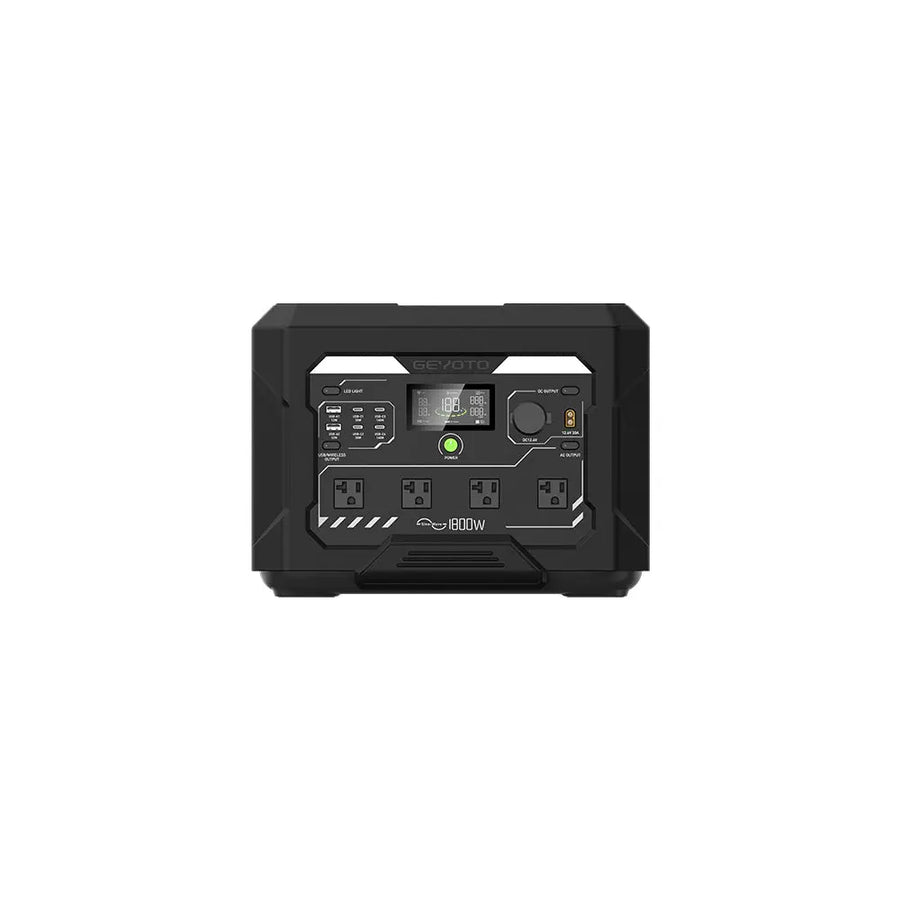
| GEYOTO N1000 Portable Power Station | Full-day boat fishing, night fishing, portable coolers, fish finder support, camp lights, multi-device setups | The N1000 is the better fit when several devices need power at the same time. Its 1024Wh capacity, 1800W pure sine wave AC output, LiFePO4 battery, and multiple ports make it useful for longer fishing sessions, shared charging, and off-grid camps. |
| GEYOTO S200 Portable Bifacial Foldable Solar Panel | Multi-day shoreline camps, vehicle-supported fishing trips, off-grid recharging | The S200 is not a power station by itself. It works as a solar charging option for compatible power stations. It makes the most sense when you are staying near a shoreline camp, dock, truck, or cabin where the panel can be placed safely in direct sunlight. |
For most anglers, the choice comes down to trip length and device load. If you only need to charge a phone, camera, and small light during a short shore trip, the N300 Solar Generator is easier to manage. If your setup includes a fish finder, GPS, portable cooler, night lights, and several people charging devices, the N1000 gives you more room to plan. For multi-day fishing camps, the S200 can help recover power during the day when paired with a compatible power station and good sunlight conditions.
Fishing Setup Reviews by Trip Type
Short Bank Fishing Trips
For short bank fishing, power needs are usually simple. You may need to charge a phone, run a small LED light, power a camera, or keep a small fan going during warm weather.
This setup does not require the largest power station. The main goal is to keep essential small devices charged while staying mobile. A compact solar generator setup can make sense here because it keeps the gear light and easy to carry.
This type of setup is best for shore fishing, quick morning trips, photography, phone charging, and light evening use.
Kayak Fishing or Small Boat Fishing
Kayak fishing and small boat fishing require careful packing. Space is limited, and anything onboard should be secured and kept dry.
A compact power setup can support a fish finder, GPS, phone, headlamp, and camera gear, but it should not be exposed to splashes or rain. Keep the unit in a dry compartment or protected area, and route cables so they do not create a tripping or snagging hazard.
For this type of trip, size and placement matter. A power station should be easy to secure, simple to access, and protected from water.
Full-Day Boat Fishing
A full day on the water often means more electronics running at the same time. Fish finder, GPS, radio, phone, camera, and lights may all need power at different points.
If your setup includes several devices, choose a power station with enough outlets and capacity to avoid constant unplugging. A 1000Wh-class unit gives more room for shared charging and longer runtime, especially when the trip runs from morning into evening.
For anglers who need more than small-device charging, GEYOTO N1000 is a strong fit. Its capacity, output, and port selection make it better suited for longer fishing sessions, multi-device use, and a more capable boat power station setup.
Night Fishing and Fishing Camps
Night fishing changes the power plan. Lights stay on longer, phones need to remain charged, and you may also use a radio, fish finder, small fan, bait aerator, or portable cooler.
A quiet battery system works well in this setting because it does not disturb the water, campsite, or other anglers nearby. A larger power station can also serve multiple people at once.
GEYOTO N1000 is a natural choice for night fishing, car-based fishing camps, and off-grid fishing where several devices need steady power. It gives more room for real-world use, especially when you want backup capacity after dark.
Multi-Day Off-Grid Fishing
Multi-day fishing needs more than a charged battery. You need a way to manage and recover power while staying away from outlets.
A solar panel can help recharge during the day, while car charging can support movement between locations. This setup is useful for remote lakes, shoreline camps, and trips where powered campsites are not available.
When the trip involves a cooler, multiple anglers, night lighting, or more than one day away from outlets, GEYOTO N1000 paired with solar charging support is a more practical fit. S200 can help recover power during daylight when conditions are suitable, giving anglers more flexibility around camp.
Power Management Tips for Fishing Trips
A fishing power station lasts longer when your gear is managed in the right order. Start with the devices that matter most on the water: fish finder, GPS, phone, radio, and night lights. These should get power before cameras, speakers, or comfort devices.
For fish finders and GPS screens, lower the brightness when conditions allow. Large displays and high-brightness settings can drain power faster during a full-day trip. Turn off sonar, mapping, or wireless features you are not using, especially when the boat is anchored or you are fishing from shore.
If you bring a portable cooler or mini fridge, cool it at home before the trip. A cooler that starts cold will draw less power than one trying to pull down warm drinks or bait in the middle of the day. Keep the lid closed as much as possible, especially in hot weather.
For night fishing, use LED lights instead of high-wattage lamps. They provide enough visibility around rods, tackle, and the boat deck while placing less load on the power station.
Before leaving, fully charge the power station, phone, fish finder battery, camera batteries, and lights. For longer trips, car charging during travel and solar charging at camp can help recover power during the day. Keep the power station dry, shaded, and ventilated so it can run steadily through the trip.
Safety Tips for Using Power Stations Near Water
Fishing puts power equipment close to water, so placement matters. Keep the power station dry and away from splashes, rain, wet grass, and standing water. Do not place it on the bottom of a boat where water may collect.
Keep vents clear during operation. Do not cover the unit with towels or gear while it is running. Use undamaged cables rated for the device you are powering, and avoid overloading the station beyond its rated output.
Most portable power stations are not fully waterproof. Even if a unit feels rugged, it should still be protected around docks, boats, shorelines, and rainy campsites.
FAQ
What size portable power station do I need for fishing?
For phones, lights, and cameras, a smaller power source may be enough. For fish finder, GPS, and full-day trips, more capacity is helpful. For night fishing, portable coolers, and multi-day camps, a 1000Wh-class power station is a better range.
Can a portable power station run a fish finder?
Yes, as long as the power station and connection setup match the fish finder’s voltage, wattage, and plug requirements. Check the fish finder manual before building your setup.
Can I use a power station on a boat?
Yes, but it should be secured, kept dry, and placed away from splashes or pooling water. Cable routing also matters so cords do not interfere with movement.
Is solar charging useful for fishing?
Solar charging is useful for multi-day fishing, shore camps, and remote areas without outlets. For short trips, it may not be necessary.
Which GEYOTO power solution is better for fishing?
For short shore trips and small electronics, the GEYOTO N300 Solar Generator keeps the setup simple. For longer sessions, fish finder support, portable coolers, night lights, or shared charging, the GEYOTO N1000 is the more capable choice. For multi-day shoreline camps, the GEYOTO S200 solar panel can help recharge a compatible power station during daylight.
Final Thoughts
The best portable power station for fishing is the one that matches your trip, not simply the largest model available. A light shore setup needs portability. A boat power station should support electronics safely and stay protected from water. A night fishing or camp setup needs more capacity, more ports, and better runtime.
For short shore trips and small electronics, the GEYOTO N300 Solar Generator keeps the setup simple. For longer sessions, fish finder support, portable coolers, night lights, or shared charging, the GEYOTO N1000 is the more capable choice. For multi-day shoreline camps, the GEYOTO S200 solar panel can help recharge a compatible power station during daylight.
Start with your device list, check wattage, think through how long each item will run, and leave extra margin for real outdoor conditions.