


The best portable power station for camping depends less on the biggest battery you can carry and more on your trip length, device list, and recharge options. For phones, cameras, lights, fans, and short laptop use, a compact few-hundred-watt-hour station may be enough. Add overnight CPAP use, refrigeration, several campers, or multiple days away from outlets, and the required capacity can increase quickly.
For lighter trips, the GEYOTO N300 combines 256Wh capacity, 300W rated output, 500W peak output, and a 7.72 lb body. For car camping and higher-demand setups, the N1000 provides 1,024Wh capacity, 1,800W rated output, and up to 3,000W peak output.
The fastest way to choose is to start with what you will actually run, how long it needs power, and whether AC, vehicle, or solar recharging will be available during the trip.
Quick Pick: Which Camping Setup Fits Your Trip?
| Camping Style | Typical Priority Loads | Better Fit | Main Reason |
|---|---|---|---|
| Day trip / light camping | Phone, camera, LED lights, fan | N300 | Lower weight and enough capacity for lighter electronics |
| Weekend basics | Phones, lighting, cameras, occasional laptop use | N300 | Keeps the setup portable |
| Overnight CPAP | CPAP + phone + lighting | N1000 | More capacity for overnight planning |
| Car camping with mini fridge | Fridge, lights, phones, laptop | N1000 | More stored energy and output headroom |
| Family / multi-device camping | Several devices sharing one station | N1000 | Larger battery and more output ports |
| Multi-day off-grid camping | Overnight loads + daily recharge | N1000 + recharge plan | Stored energy plus AC, vehicle, or solar recovery |
How to Choose the Best Portable Power Station for Camping
Start with your own gear rather than a generic capacity recommendation. Five questions usually tell you which size makes sense:
- What devices will you actually use? Phones and lights require far less energy than refrigeration or overnight medical equipment.
- Which devices run at the same time? Their combined operating wattage needs to stay within the station's rated output.
- Does anything have startup demand? Compressor- or motor-driven equipment may briefly require more power when starting.
- How many hours or nights need to be covered? Battery capacity determines the stored energy available between charges.
- How will you recharge? Wall, vehicle, and solar access can change how much capacity you need to carry at the start of the trip.
Weight matters too. A larger battery may provide longer runtime, but that advantage becomes less useful if the station is too heavy for the way you reach the campsite.
If watts and watt-hours are easy to mix up, review how portable power station wattage and battery capacity affect device compatibility and runtime before sizing your trip.
How Much Capacity Do You Need for Different Camping Trips?
Different devices use power at very different speeds. A phone needs very little energy. A laptop uses more. A CPAP machine or mini fridge can drain a small battery much faster, especially when used overnight.
Use this table as a starting point:
| Camping Scenario | Priority Loads | What Determines Capacity |
|---|---|---|
| Light day camping | Phones, cameras, LED lighting | Number of charges and portability |
| Weekend tent camping | Above + fan or laptop | Hours of use and shared charging |
| CPAP camping | CPAP + communication + lighting | Exact CPAP power requirement and overnight hours |
| Car camping | Fridge, phones, lighting, laptop | Refrigerator cycling + total daily energy |
| Family camping | Several devices and users | Combined loads and charging frequency |
| Multi-day off-grid camping | Overnight loads + shared devices | Daily consumption + available recharge |
The trip category is only a starting point. Check the actual equipment label or manufacturer documentation before sizing around a CPAP machine, refrigerator, or other continuous load.
How Long Can the N300 and N1000 Run Camping Gear?
Runtime depends on the connected load, device settings, temperature, and whether several devices are drawing power at the same time. The following figures are useful single-device reference points for common camping loads.
| Camping Device | Reference Load | N300 | N1000 |
|---|---|---|---|
| LED Light | 10W | 20.5 hr | 81.9 hr |
| Speaker | 10W | 20.5 hr | 81.9 hr |
| Fan | 40W | 5.1 hr | 20.5 hr |
| Mini Fridge | 60W | 3.4 hr | 13.7 hr |
| CPAP Machine | 90W | 2.3 hr |
9.1 hr |
These figures are single-device reference runtimes. They do not mean a campsite can run a fridge, CPAP machine, fan, speaker, and lights together for the times shown above.
If several devices are connected at once, their combined load uses the battery faster. Refrigerator cycling, CPAP settings, heated tubing or humidifier use, temperature, startup demand, and other operating conditions can also change real-world runtime.
The practical difference is clear: the N300 works better for lighter, shorter-duration camping loads, while the N1000 gives you more room for overnight devices, refrigeration, and shared multi-device use.
Which GEYOTO Power Station Fits Your Camping Style?
GEYOTO N300: Better for Lightweight Camping
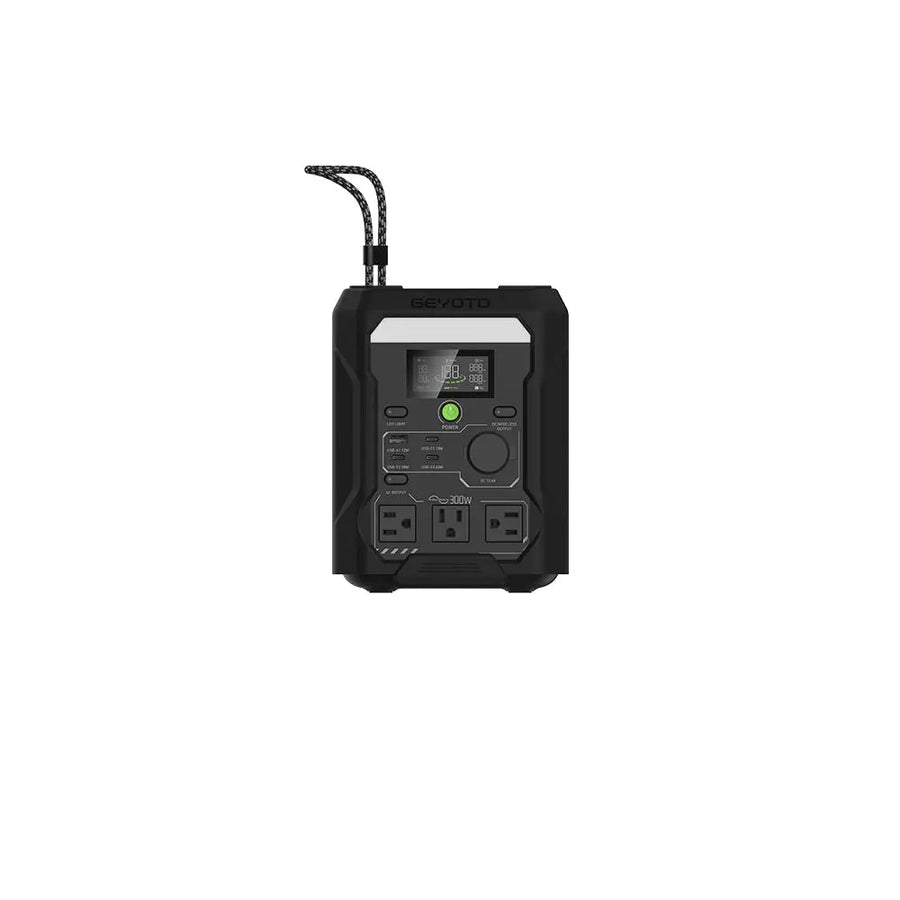
The N300 makes the most sense when your camping setup is built around smaller electronics and portability. It combines 256Wh capacity, 300W rated AC output, 500W peak output, nine output ports, and up to 140W solar input.
At 7.72 lb / 3.5 kg excluding the silicone armor, it is easier to carry from a vehicle to a campsite than a 1kWh-class station. That makes it a practical fit for phones, cameras, drones, LED lighting, speakers, fans, short laptop use, and other compatible lower-power electronics.
The tradeoff is runtime. Continuous or overnight loads can use a 256Wh battery quickly, so refrigeration and medical-device planning should start with the exact device requirements rather than assuming a compact station will cover the whole night.
GEYOTO N1000: Better for Car Camping and Longer Trips
When the campsite includes refrigeration, several users, overnight equipment, or multiple days away from outlets, moving into the 1kWh class gives you more room to plan.
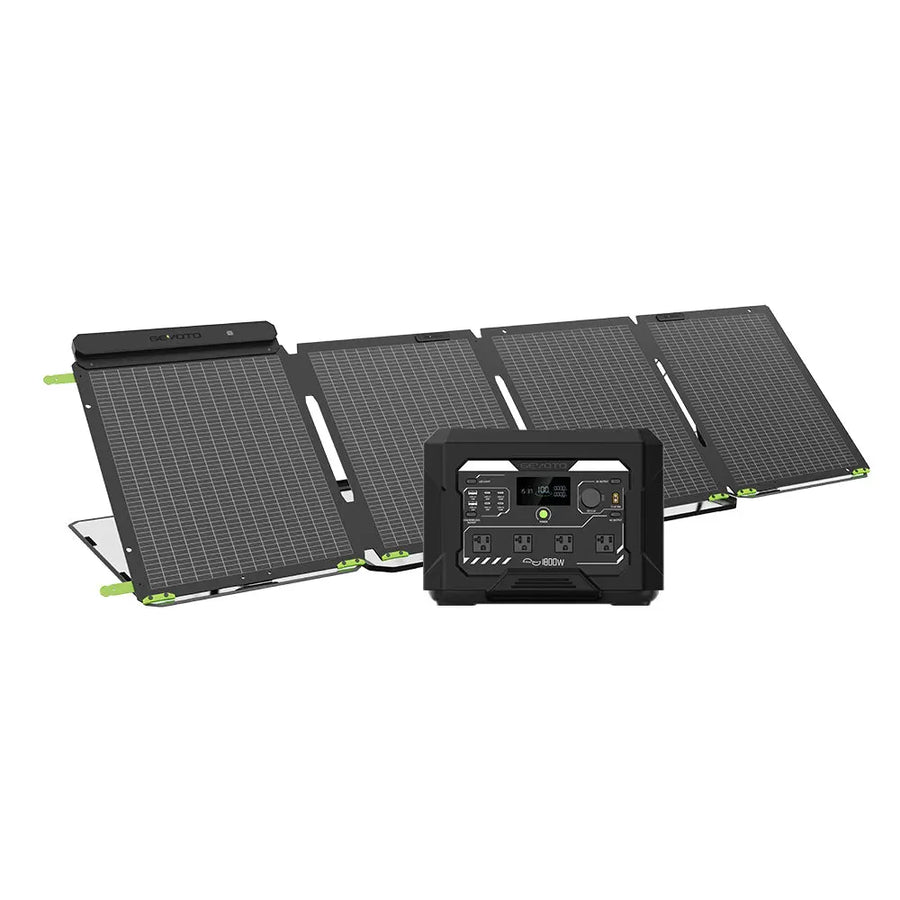
The N1000 combines 1,024Wh capacity, 1,800W rated AC output, up to 3,000W peak output, 13 output ports, and up to 800W solar input. At 25.57 lb / 11.6 kg excluding the silicone armor, it is better suited to car camping, RV-style travel, or a fixed base camp than a trip where every pound needs to be carried far from the vehicle.
The larger battery does not mean every appliance should be used without checking it first. Add the operating wattage of devices that may run together and verify startup requirements for compressor- or motor-driven equipment.
What Should CPAP Campers Check?
CPAP power use varies by machine, pressure settings, humidifier use, heated tubing, and connection method. Do not choose battery capacity from a generic CPAP wattage.
As a reference point, a 90W CPAP load is estimated at about 2.3 hours on the N300 and 9.1 hours on the N1000. Actual runtime can differ substantially from that example, so test your exact setup at home before relying on it overnight.
If CPAP is a primary reason for carrying backup power, use CPAP battery backup sizing for overnight use to plan around the actual machine rather than a generic camping estimate.
What Should You Check for a Camping Fridge?
A camping refrigerator adds two variables that phones and lights do not: compressor cycling and possible startup demand.
The current GEYOTO reference for a 60W mini fridge is about 3.4 hours on the N300 and 13.7 hours on the N1000. Those are planning references rather than promises of elapsed campsite time because ambient temperature, thermostat settings, insulation, door openings, compressor cycling, and other connected loads all affect actual consumption.
Pre-cool the fridge before leaving home when practical, keep door openings brief, and check the appliance's startup requirement before choosing the power station.
Best Solar Generator for Camping
A portable power station stores energy; adding compatible solar panels gives you another way to restore some of that energy while you are away from wall outlets.
The N300 supports up to 140W solar input, while the N1000 supports up to 800W solar input. Those figures are input limits, not guaranteed charging power. Actual solar input changes with panel wattage, sunlight, cloud cover, shade, temperature, and panel angle.
For example, the N1000 dual-panel solar kit pairs the station with two 200W panels for 400W of rated panel power. Solar can extend a multi-day plan, but it should not be treated as unlimited or guaranteed continuous power.
What Changes for Fall Camping?
Fall does not automatically mean you need a larger power station, but it does change the margin you should leave in your power plan.
Earlier sunsets can increase lighting hours. Headlamps, lanterns, phones, navigation devices, and cameras may stay in use longer than they did on a summer trip.
Cooler nights can change real-world battery performance and device use. You may also add loads such as an electric blanket or spend more time using electronics after dark. Do not assume a warm-weather runtime estimate will carry over unchanged.
Solar recovery can become less predictable. Shorter daylight, lower sun angles, clouds, and tree cover can reduce how much energy a panel returns to the battery during the day.
Both the N300 and N1000 list a charging temperature range of 32°F to 113°F (0°C to 45°C). If fall conditions approach freezing, follow the published charging limits rather than assuming the station can be recharged outdoors under any temperature.
The practical approach is to leave battery reserve, keep the station dry with clear airflow, and treat solar as a recharge opportunity rather than guaranteed daily recovery.
For a deeper seasonal setup covering shorter days, colder nights, gear, and solar planning, use the fall camping power station guide.
Common Mistakes When Choosing a Camping Power Station
One mistake is choosing by trip length alone. “Weekend camping” can mean two phones and a lantern, or it can mean a refrigerator, CPAP machine, laptop, and several people sharing one battery. Build the power plan from the loads, not the number of nights.
Another mistake is looking only at watt-hours. Battery capacity determines stored energy, but rated and peak output determine whether the equipment can actually run.
A third mistake is treating solar panel wattage as guaranteed charging power. Panel rating is a maximum reference; actual input changes throughout the day with sunlight, shade, clouds, temperature, and panel angle.
Finally, avoid planning around an empty battery. Leave some reserve for a delayed return, unexpected weather, navigation, communication, or a device that runs longer than expected.
Tips to Make Your Camping Power Station Last Longer
Charge the power station fully before leaving home. Turn off unused output ports. Use LED lights instead of high-watt lamps. Charge phones and laptops during the day if you have solar panels set up. Keep the unit dry, shaded, and well ventilated.
For mini fridges, cool the fridge at home first, pack it cold, and avoid opening it too often. For CPAP equipment, use only a connection method supported by the CPAP manufacturer. If an approved DC option is available, compare it with your normal AC setup during a home test rather than assuming a fixed efficiency improvement.
In cooler weather, keep the station dry, maintain clear ventilation, and follow the published charging and operating temperature limits rather than planning around ideal summer conditions.
Small habits can stretch your battery and make your camp power supply more reliable.
FAQ: Portable Power Stations for Camping
What size portable power station do I need for camping?
Start with your actual devices, hours of use, and recharge options. A light trip centered on phones, cameras, lights, and fans may fit a few-hundred-Wh station. Refrigeration, overnight CPAP use, several campers, or multi-day stays can justify moving toward a 1kWh-class setup.
Is a 256Wh power station enough for camping?
It can be enough for lighter trips. The N300's 256Wh capacity is best suited to phones, cameras, lights, fans, speakers, laptop charging, and other compatible lower-power electronics. Continuous or overnight loads require closer runtime planning.
Can a portable power station run a CPAP overnight while camping?
Potentially, but size around the exact CPAP. With the N1000, a 90W reference load has an estimated runtime of about 9.1 hours. Humidifier use, heated tubing, pressure settings, connection method, and the specific machine can change actual runtime.
Do I need solar panels for camping?
Not always. A short trip with a fully charged battery and light loads may not need solar at all. Solar becomes more useful as trip length and daily consumption increase, especially when refrigeration or overnight equipment uses a meaningful share of the battery each day.
Final Thoughts
The best portable power station for camping is the smallest setup that can reliably cover your real loads, trip length, and recharge plan.
The N300 favors portability for lighter electronics-focused trips. The N1000 provides more capacity and output for car camping, refrigeration, overnight equipment, and shared multi-device setups. Whichever size you choose, verify the actual device requirements, leave some reserve, and test important equipment before the trip.