

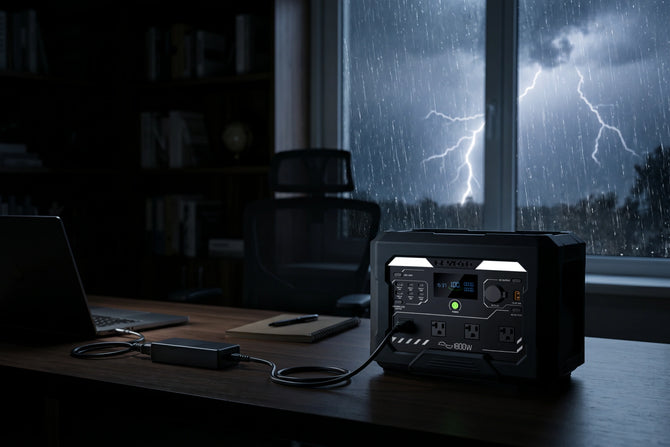




Power outages across the US have become longer and less predictable. Severe storms, winter freezes, summer heat waves, and aging grid infrastructure can all cut electricity when households need it most — and often with little warning. When the power goes out, refrigerators stop cooling, home offices go dark, medical devices lose support, and the routines of daily life come to a halt.
That's why more homeowners now treat backup power as part of a basic home resilience plan rather than an optional upgrade. And solar battery systems, in particular, have become a practical option for households that want reliable backup without fuel storage, loud engines, or complex installation.

Quick Answer: How Do You Choose the Right Solar Battery Backup System?
Start with your actual load: add up the wattage of the appliances you need to keep running, multiply by the hours of coverage you need, then add 20–30% for efficiency losses. From there, prioritize LiFePO4 battery chemistry for longevity, look for a UPS switching speed under 10ms if you're running sensitive electronics, and confirm the system supports hybrid recharging — not just solar — so you're covered on cloudy days too.
What Is a Solar Battery Backup System?
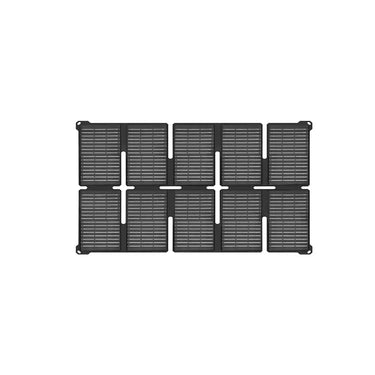
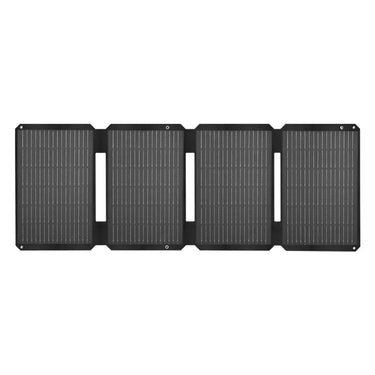
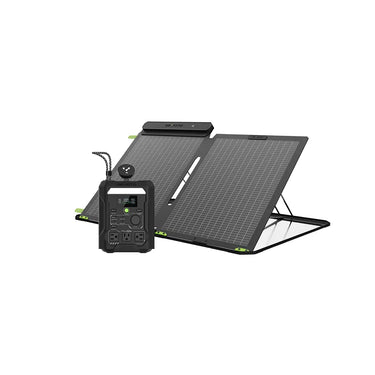
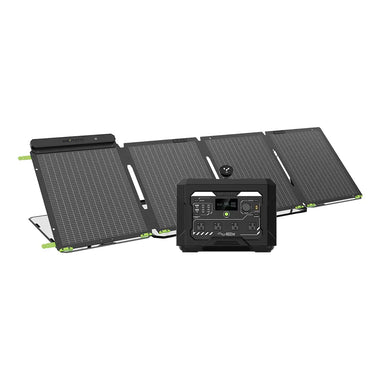
A solar battery backup system combines one or more solar panels with a battery storage unit and an inverter. Under normal conditions, the panels charge the battery. When grid power fails, the system switches over and powers your home's devices from stored energy.
The key components to evaluate before buying:
- Battery capacity (Wh) — how much energy the system holds
- Output power (W) — how much it can deliver at once
- Battery chemistry — affects lifespan, safety, and long-term value
- Switching speed — how fast it takes over when the grid fails
- Recharge options — solar only, or solar + AC + car input
Automatic vs. Manual Switchover
Lower-end setups require manual action when the power goes out. Better systems detect the outage and switch over automatically — no input needed. For overnight outages or situations where you're away, that difference is significant.
What Happens When the Sun Isn't Out
Solar-only recharging has a real limitation: during a multiday storm — exactly when backup power matters most — solar input drops. The practical solution is a system that also accepts wall outlet and car charging, so you can top up from whatever source is available.
How Much Capacity Do You Actually Need?
Rather than a general "get at least X" recommendation, it helps to look at what you'll actually run during an outage and for how long.
Estimated runtime at 1,024Wh capacity · Formula: capacity × 0.8 ÷ appliance wattage
| Appliance | Avg. Wattage | Estimated Runtime |
|---|---|---|
| Refrigerator | ~150W | ~5.5 hours |
| LED lighting (5 bulbs) | ~50W | ~16 hours |
| Laptop | ~45W | ~18 hours |
| 55" TV | ~100W | ~8 hours |
| Phone charging (×4) | ~20W | Multiple full charges |
| Microwave (intermittent) | ~1,000W | ~49 min continuous |
| Window AC unit | ~900W | ~55 min |
Refrigerator, lights, and devices through a 12-hour outage? A 1,024Wh system handles that comfortably. Air conditioning is the biggest draw — if running AC is a priority, focus on systems with high peak output modes that handle the startup surge without tripping.
The basic sizing formula: total wattage of appliances running simultaneously × hours needed = minimum Wh requirement. Add 20–30% buffer for inverter efficiency losses.
LiFePO4 vs. NMC: The Battery Chemistry Decision
Not all lithium batteries age the same way. Two chemistries dominate the market — Lithium Iron Phosphate (LiFePO4) and Nickel Manganese Cobalt (NMC) — and the difference becomes apparent over time.
| LiFePO4 | NMC | |
|---|---|---|
| Cycle life | 3,000–4,000+ cycles | 500–1,000 cycles |
| Thermal stability | High — stable under stress | Lower — more heat-sensitive |
| Energy density | Moderate | Higher |
| Long-term value | Strong | Degrades faster |
A LiFePO4 battery rated at 4,000 cycles, charged once daily, lasts over a decade. NMC at 500 cycles under the same conditions degrades in under two years. For a home backup system that sits on standby and charges regularly, that gap is significant. LiFePO4 also handles heat better — it's the chemistry used in EV battery packs for the same reason.
The Spec Most Buyers Miss: Switching Speed
When the grid fails, your backup system needs to take over fast. A slow switchover — even a few seconds — can crash computers, reset routers, and interrupt medical devices.
Consumer UPS devices typically switch in under 20ms. Better portable power stations now achieve under 10ms, fast enough that most electronics don't register the gap. This spec rarely appears prominently in product listings, but it's one of the more practical differences for anyone running home office equipment, network hardware, or sensitive medical devices.
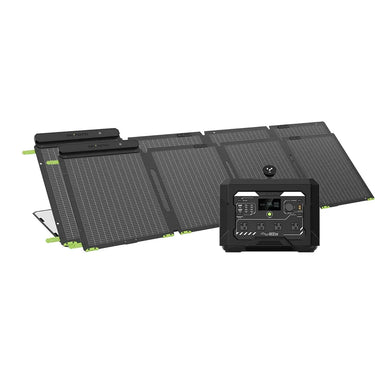
The GEYOTO N1000 switches in under 10ms, with a 1,024Wh LiFePO4 battery rated at 4,000 cycles, 1,800W pure sine wave output, and a 3,000W P-Boost mode for handling appliance startup surges. AC fast charging brings it to 80% in 43 minutes — useful when a storm is forecast and you need to top up quickly.
≤10ms
UPS Switching Speed
43 min
Charge to 80%
4,000
Battery Cycles
Why Choose the GEYOTO N1000?
Not all 1,000Wh-class stations are built the same. Here's how the N1000 stands apart from comparable models on the market:
| Other 1,000Wh Stations | GEYOTO N1000 | |
|---|---|---|
| Fast Charge to 80% | 45–60 min (varies by brand) | 43 min |
| Boost / Surge Mode | Peak only — drops under sustained load | 3,000W constant output |
| UPS Switching | 10–20ms (varies by brand) | ≤10ms |
| USB Ports | 2–3C + 1–2A | 4C + 2A |
| Wireless Charging | Not available | 25W Qi built-in |
| Built-in Light | Most models don't include one | ✓ LED included |
| Protective Case | Sold separately or not available | Silicone case included |
| Warranty | 5 years | 5 years (3+2) |
The 43-minute charge to 80% is the most practical advantage when you have advance warning of a storm and limited time to prepare. The 3,000W constant P-Boost mode — rather than a peak-only surge rating — means the N1000 sustains that output under load rather than stepping down. Wireless charging and a built-in LED light round out a feature set that most comparable stations don't offer at this price tier. One honest tradeoff: at 13.6kg (30 lbs), it's on the heavier side for a portable unit.

Portable Solar Systems vs. Whole-Home Standby
Whole-Home Standby Generator
Permanently installed, runs on natural gas or propane, switches on automatically, and can power an entire home indefinitely with fuel supply. Well-suited for households with high-draw appliances, well pumps, or medical equipment requiring continuous power. Installation costs and ongoing fuel dependency are the main tradeoffs.
Portable Solar Battery System
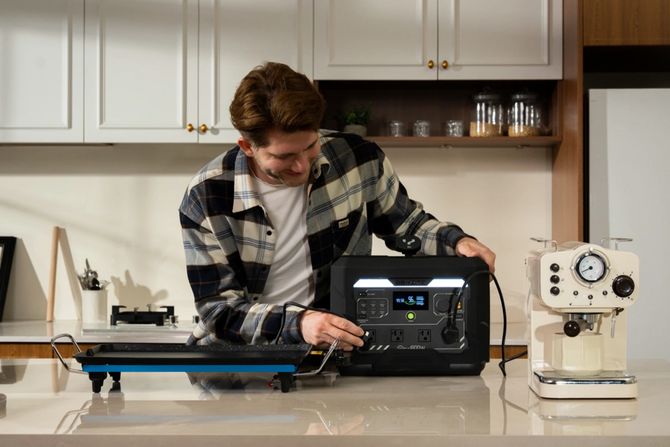
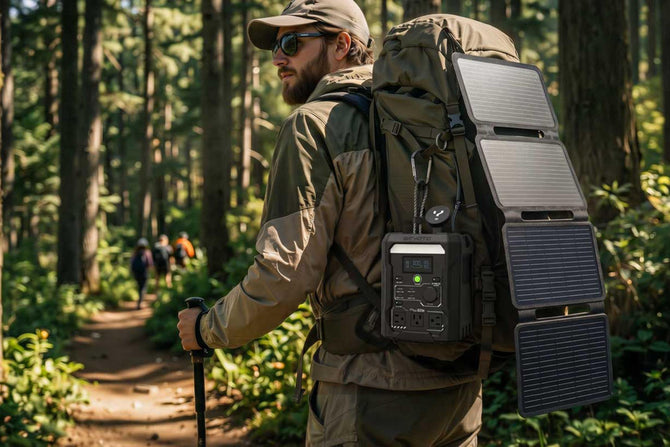
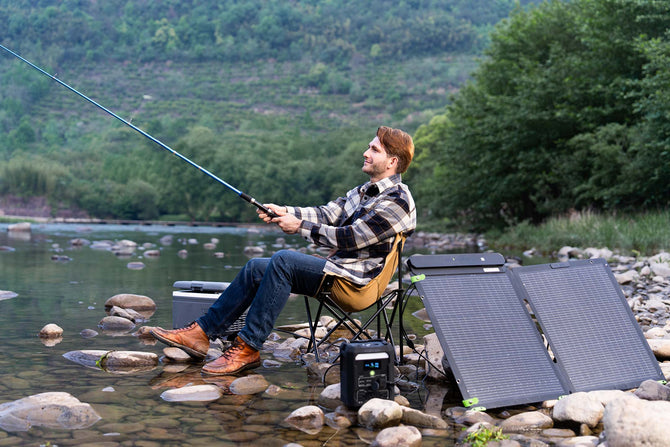
Offers flexibility, zero emissions, and no installation. For households managing typical outages of 12–24 hours — keeping the fridge running, lights on, devices charged — they cover essential needs without a dedicated installation or fuel on-site. They also serve double duty for camping, travel, and outdoor use.
A Practical Buying Checklist
Before deciding on a system, work through these:
1
Capacity — Does it cover your essential load for the duration you need?
Peak output — Can it handle the startup surge of your highest-draw appliance?
2
3
Battery chemistry — LiFePO4 for long-term reliability
Switching speed — Under 10ms for sensitive electronics
4
5
Recharge inputs — Solar + AC + car for flexibility in any condition
Recharge speed — How long to full charge from AC when time is short?
6
7
Port count — Enough outputs to run everything at once?
Frequently Asked Questions
Can a 1,024Wh system run a refrigerator overnight?
A typical refrigerator averages around 150W (cycling on and off). Using the 0.8 efficiency factor, that works out to roughly 5.5 hours of runtime — enough for a standard overnight outage on the fridge alone. Running it alongside lights and device charging will reduce that window; pairing with solar recharging during the day extends it considerably.
Do solar battery backups keep charging during a blackout?
Yes. As long as the panels are receiving sunlight, they continue charging the battery even when the grid is down.
Is a pure sine wave inverter required?
For laptops, medical equipment, and CPAP machines — yes. Modified sine wave output can cause overheating or reduced performance in sensitive devices. Pure sine wave inverters are standard in reputable portable power stations.
Picking the right solar battery backup system comes down to honest math — matching capacity to what you actually need — and a few specs that only show up when the power is out: switching speed, peak output under surge loads, and recharge flexibility when the sun isn't cooperating.
Explore the GEYOTO N1000 Solar Generator and full product lineup at GEYOTO Visit geyoto.com →


