






A battery backup for home outages should be chosen by battery chemistry, usable capacity, AC output, surge support, and recharge method. For most U.S. households preparing for storms, grid interruptions, or rolling outages, LiFePO4 is usually the better choice than traditional lithium-ion because it is built for longer service life, better stability, and repeated emergency use. Lithium-ion still makes sense when compact size and lighter weight matter most, but home backup is usually about reliability first.
The best purchase is not always the largest battery. A renter who wants to keep phones, Wi-Fi, and lights running has different needs from a homeowner who wants refrigerator backup, laptop charging, and power for several essentials at once. The right setup starts with your outage plan.

Click the image to shop now
What Is a Battery Backup for Home?
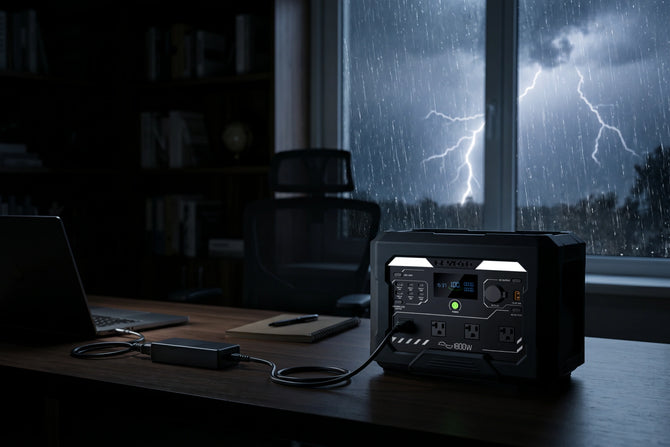
A battery backup for home is a stored-energy system that powers essential devices or appliances when grid power is unavailable.
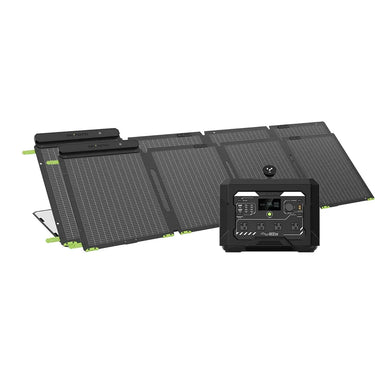
Home battery backup can mean several things. A small power bank may charge a phone. A portable power station can run electronics, lights, routers, laptops, and selected appliances. A solar generator pairs a power station with solar panels for off-grid recharging. A whole-home battery system connects to the house and supports multiple circuits, usually with professional installation.
For most households, the practical starting point is not whole-home backup. It is essential-load backup: deciding what must stay on during an outage and choosing a system that can safely support those devices.
What Can a Home Battery Backup Power During an Outage?
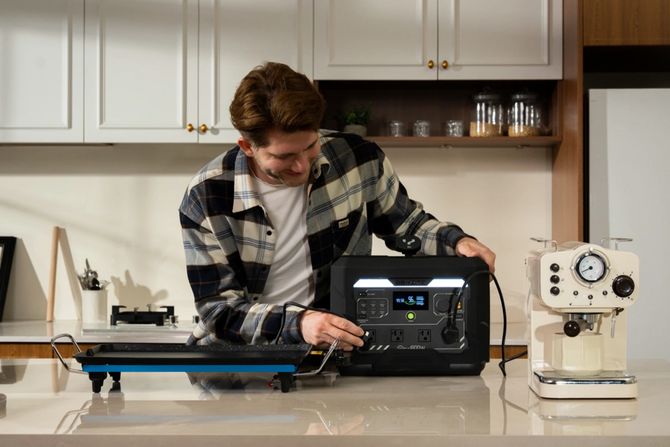
A properly sized backup battery can support essentials such as a refrigerator, Wi-Fi router, phones, LED lights, laptops, CPAP-style devices, small fans, and selected home appliances.
The key word is “properly sized.” Phones and routers are simple low-watt devices. Refrigerators, freezers, pumps, and some kitchen appliances need more planning because they may have startup surge or higher continuous demand.
A smart priority list looks like this:
- Refrigerator or freezer for food protection
- Phone charging and Wi-Fi for communication
- LED lighting for safety and visibility
- CPAP-style or approved personal health devices
- Laptop or work device
- Small fan or comfort device
Do not assume one battery can power everything in the home. Start with the devices you truly need, then match the battery to that list.
Why Does Battery Chemistry Matter for Home Backup?
Battery chemistry matters because it affects safety, lifespan, weight, heat tolerance, and long-term reliability.
Two power stations may look similar on the outside but behave differently over years of charging, storage, and emergency use. Home backup is different from casual phone charging. A backup system may sit stored for weeks, recharge quickly before a storm, run higher-load appliances, then repeat that cycle many times.
That is where LiFePO4 has a clear role.
What Is LiFePO4?
LiFePO4, or lithium iron phosphate, is a lithium battery chemistry commonly used in modern home backup power stations because it prioritizes stability and long cycle life.
For home backup, this matters because the battery is not only being carried around for convenience. It may be stored indoors, recharged repeatedly, paired with solar panels, or used during long outages. LiFePO4 is often the better fit for households that want a reliable emergency power source rather than a small travel battery.
What Is Traditional Lithium-Ion?
Traditional lithium-ion batteries are common in phones, laptops, tools, and many compact devices because they offer strong energy density in a lighter package.
That compact design is useful for portable electronics. The tradeoff is that many traditional lithium-ion power stations are less ideal for repeated deep cycling, heat exposure, and long-term outage preparation compared with LiFePO4 models. Lithium-ion is not a poor technology; it simply fits a different use case.
LiFePO4 vs Lithium-Ion: Which Is Better for Home Outages?
LiFePO4 is usually better for home outage backup, while traditional lithium-ion is better when lightweight portability is the top priority.
| Decision Factor | LiFePO4 Battery Backup | Traditional Lithium-Ion Backup |
|---|---|---|
| Best for | Home backup, solar storage, RV, emergency use | Lightweight electronics and compact portable devices |
| Cycle life | Better suited for repeated charging and discharging | Usually shorter under frequent cycling |
| Thermal stability | Stronger choice for indoor emergency storage | More sensitive to heat and battery stress |
| Weight | Often slightly heavier | Often lighter and more compact |
| Long-term use | Better for frequent backup and outage readiness | Better when low weight matters more |
| Home appliances | Better fit when output and surge support are sufficient | Must be checked carefully for appliance loads |
For a U.S. home preparing for storms, summer outages, or winter grid interruptions, LiFePO4 is usually the more practical chemistry. The battery may weigh more, but the tradeoff makes sense when the goal is dependable backup for real household needs.
Which GEYOTO Battery Backup for Home Fits Your Outage Plan?
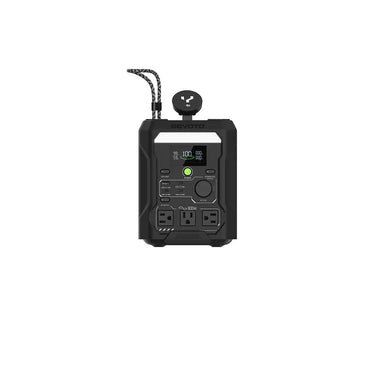
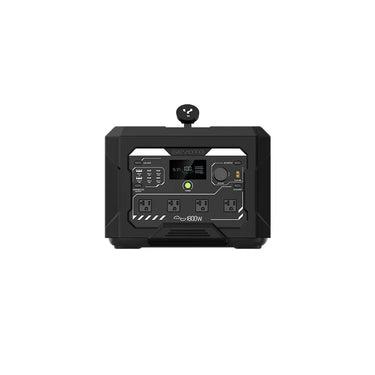
Choose GEYOTO N300 for small essentials and short backup needs; choose GEYOTO N1000 when you need more capacity for home appliances, longer outages, and higher-power devices.
This is the easiest way to think about the GEYOTO N Series: N300 is the compact emergency option, while N1000 is the stronger home backup option.
| Home Backup Need | GEYOTO N300 | GEYOTO N1000 |
|---|---|---|
| Best fit | Small essentials and short use | Home appliances and longer backup |
| Capacity | 256Wh | 1024Wh |
| AC output | 300W | 1800W |
| Typical use | Phones, laptops, Wi-Fi router, lights, compact emergency kit | Refrigerator, router, lights, laptops, selected home appliances |
| Portability | More compact and easy to carry | Larger capacity for home and RV backup |
| Buyer profile | Renters, campers, light emergency use, short outages | Homeowners, storm prep, appliance backup, longer outages |
For Small Essentials
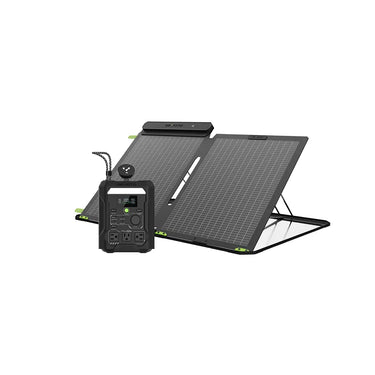
If your outage plan is mainly about staying connected, GEYOTO N300 is the lighter option for phones, laptops, Wi-Fi, LED lights, and short backup situations. It makes sense for renters, camping, travel, and compact emergency kits.
For Home Appliances
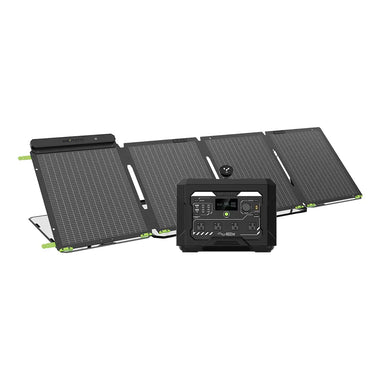
If your plan includes a refrigerator, multiple essentials, or longer power interruptions, GEYOTO N1000 is the stronger fit. Its 1024Wh capacity, 1800W AC output, pure sine wave output, and up to 3000W surge support are better aligned with home appliance backup. Its 0–80% fast charging in about 43 minutes also helps when power returns briefly between outages.
What Size Battery Backup for Home Appliances Do You Need?
Choose the size by listing essential appliances, checking their running watts and startup surge, then matching them to battery capacity and AC output.
Capacity and output are not the same thing. Capacity, measured in watt-hours, tells you how much energy the battery stores. Output, measured in watts, tells you how much power it can deliver at one time. Surge output matters for appliances with motors or compressors, such as refrigerators.
A small battery may have enough energy to charge phones for a long time but not enough output to run a larger appliance. A larger power station may handle more devices, but you still need to keep the total load within its rated limits.
Which Appliances Should You Prioritize First?
Start with appliances that protect food, communication, basic lighting, and health-related routines.
If you are building a home outage plan, list your essential devices before shopping. Write down the devices, their wattage, and whether they have a startup load. A refrigerator, Wi-Fi router, phone charger, laptop, and LED lamp are a common essential-load setup. A microwave, electric heater, or air conditioner requires much more caution and may not be realistic for many portable battery backups.
How Long Can a 1024Wh Battery Backup Run Home Essentials?
A 1024Wh battery backup can support many essential devices for hours, but runtime changes with appliance load, temperature, and how many devices are connected.
| Home Outage Load | Example Power Use | Estimated Runtime With 1024Wh Capacity |
|---|---|---|
| Refrigerator during normal cycling | 150W | About 5.5 hours |
| Wi-Fi router | 10W | About 80 hours |
| CPAP-style device without humidifier | 40W | About 20 hours |
| LED light | 10W | About 80 hours |
| Laptop | 60W | About 13.5 hours |
These are planning estimates, not fixed guarantees. A refrigerator cycles on and off. A router uses power steadily. A fan changes by speed setting. If you run several devices together, total runtime drops.
GEYOTO N300 fits lower-power needs such as phone charging, a router, laptop use, or LED lighting. GEYOTO N1000 is better when you need more capacity for a refrigerator, multiple devices, or longer backup windows.
Is Battery Backup for Home Solar Worth Considering?
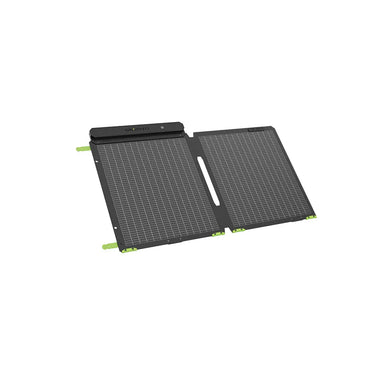
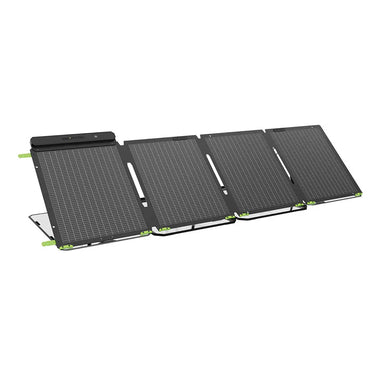
Battery backup for home solar is worth considering when you want to extend backup time during longer outages, but solar recharge depends on sunlight, panel wattage, input limits, and weather.
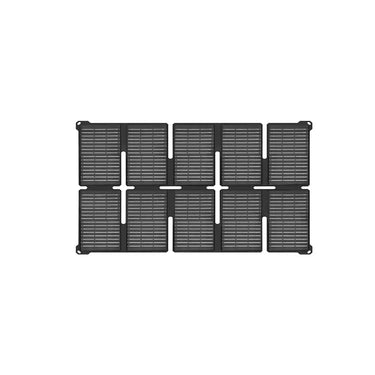
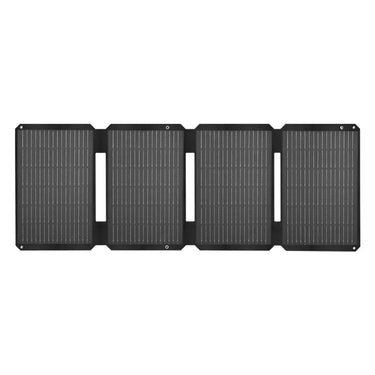
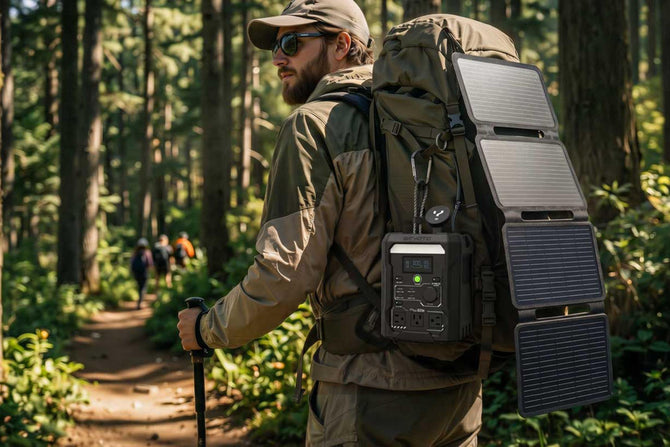
Solar does not turn a battery into unlimited power. Cloud cover, shade, panel angle, season, and daylight hours all affect charging. Still, solar can be useful when outages last longer than expected, especially for RVs, cabins, storm preparation, and off-grid use.
Before adding solar panels, check:
- Solar input limit
- Compatible voltage range
- Panel wattage
- Connector type
- Outdoor placement space
- Expected sunlight during outage season
For compact backup, N300 can pair with solar for light off-grid use. For longer home backup planning, N1000 is the better match because it has more storage capacity and supports higher-demand scenarios.
Portable Battery Backup vs Whole-Home Battery: Which Should You Buy?
Choose a portable battery backup for targeted essential loads; choose a whole-home battery system when you want automatic backup for multiple circuits or the entire home.
| Need | Portable Power Station | Whole-Home Battery System |
|---|---|---|
| Installation | Usually plug-and-play | Often requires professional installation |
| Best for | Essential appliances and mobile use | Multiple circuits or whole-home backup |
| Portability | Easy to move | Fixed in place |
| Entry barrier | Simpler to start | More complex |
| Outage role | Targeted backup | Integrated home backup |
| Solar pairing | Often optional | Often integrated with rooftop solar |
For renters, apartment residents, RV users, and homeowners who mainly need a refrigerator, router, phone charging, laptop, and lighting, a portable LiFePO4 power station is usually the more practical starting point.
What Safety Features Should a Home Battery Backup Have?
A home battery backup should have stable battery chemistry, a battery management system, pure sine wave AC, overload protection, temperature protection, and clear rated limits.
A battery management system helps monitor and protect the unit during charging and discharging. Pure sine wave AC is important for many appliances and sensitive electronics. Clear output ratings help users avoid overloading the system.
Battery backup systems can be used indoors when operated correctly. Fuel-powered generators are different and must never be used indoors because of exhaust risk. For apartments, townhomes, and indoor emergency storage, a LiFePO4 portable power station is often the more realistic backup option.
What Should You Buy for a Home Power Outage?
Buy a LiFePO4 battery backup with enough capacity, AC output, surge support, and recharge options for your essential appliances.
Use this buying checklist:
- List the devices you need during an outage.
- Check running watts and startup surge for appliances.
- Choose LiFePO4 if long cycle life and stability matter.
- Match capacity to your expected outage length.
- Confirm AC output and pure sine wave power.
- Check recharge speed and solar compatibility.
- Choose portable backup or whole-home backup based on installation needs.
For light emergency backup, GEYOTO N300 is the compact choice. For home appliances, longer outages, and stronger AC output, GEYOTO N1000 is the better fit.
Recommended GEYOTO Battery Backup Options

GEYOTO N300
Small essentials and short use. 256Wh capacity. 300W AC output. Phones, laptops, Wi-Fi router, lights, compact emergency kit.
Shop N300
GEYOTO N1000
Home appliances and longer backup. 1024Wh capacity. 1800W AC output. Refrigerator, router, lights, laptops, selected home appliances.
Shop N1000What Is the Best Battery Backup for Home Power Outage Use?
For most essential home outage needs, the best battery backup is a LiFePO4 portable power station with pure sine wave AC, enough surge output, and flexible charging.
Traditional lithium-ion still has value when low weight and compact design matter most. For repeated emergency use, home storage, solar pairing, and appliance backup, LiFePO4 is usually the better direction.
The best battery backup for home power outage planning is the one that matches your actual device list. Choose N300 if you need compact backup for Wi-Fi, phones, laptops, lights, and short use. Choose N1000 if your plan includes a refrigerator, multiple home essentials, RV backup, or longer outage preparation.
FAQs
1. Is LiFePO4 Better Than Lithium-Ion for Home Backup?
Yes, for most home backup use, LiFePO4 is usually better because it is better suited to long cycle life, thermal stability, and repeated charging. Traditional lithium-ion can still be useful when compact size and lighter weight matter more.
2. How Much Battery Backup Do I Need for Home Appliances?
It depends on which appliances you want to run, their wattage, startup surge, and the outage length you want to cover. Start with essential devices, then choose capacity and AC output around that list.
3. Can a Battery Backup Run a Refrigerator?
Yes, if it has enough AC output, enough surge support, and enough battery capacity. Pure sine wave AC is recommended for compressor appliances.
4. Can I Use Battery Backup for Home Solar?
Yes, if the power station supports compatible solar input. Solar recharge can extend backup time, but actual charging depends on sunlight, panel setup, and input limits.
5. Is GEYOTO N300 Enough for Home Backup?
GEYOTO N300 is enough for light backup needs such as phones, laptops, Wi-Fi routers, LED lights, and compact emergency kits. It is not the right choice for larger appliances that exceed its rated output.
6. When Should I Choose GEYOTO N1000 Instead?
Choose GEYOTO N1000 when you need higher capacity, stronger AC output, appliance backup, refrigerator support, RV power, or longer outage preparation. It is the better fit for households that want one portable power station for multiple essential devices.


