

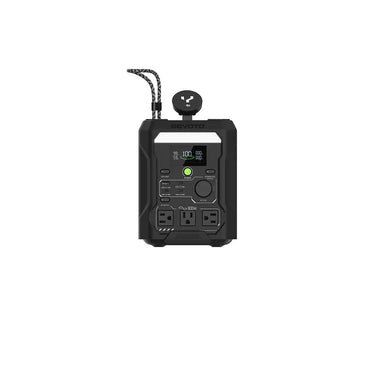
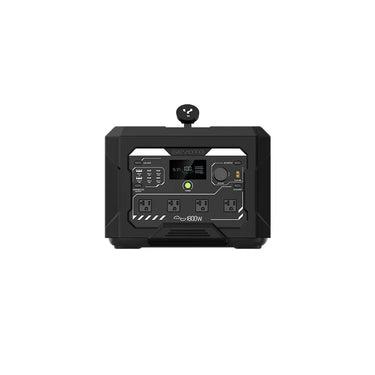
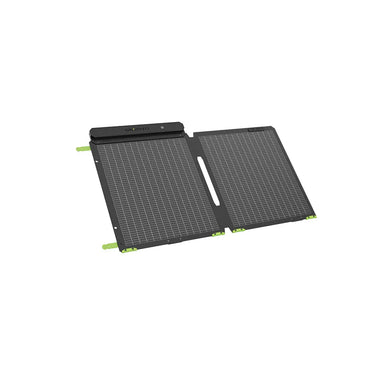
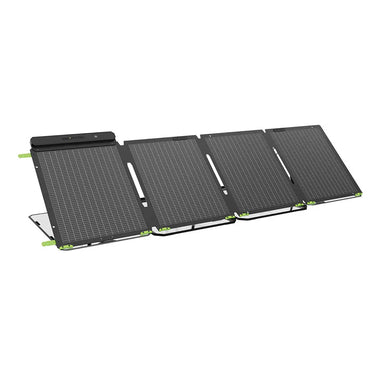
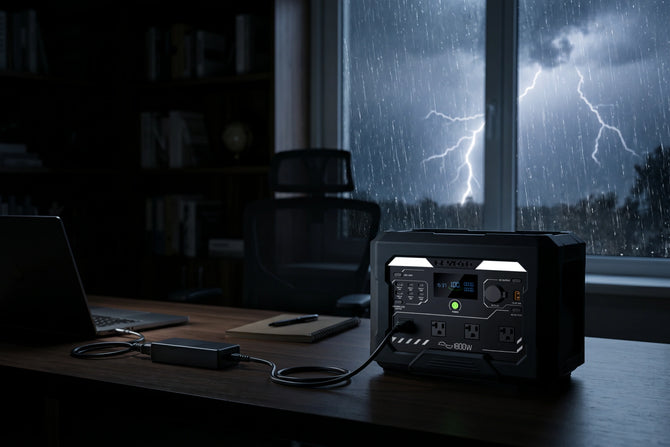




A solid RV off-grid power setup lets you keep your fridge, lights, CPAP, and devices running for days without any shore power connection. The approach that works for most RVers is straightforward: a portable power station sized for your daily draw, paired with solar panels that recharge it throughout the day. Whether you're parked on BLM land in Utah, dispersed camping in a Colorado national forest, or skipping a fully booked RV park, the same principles apply: know your real power needs, choose the right capacity, and have multiple ways to recharge.

Click the image to shop now
Why Shore Power Doesn't Always Work for How You Want to Camp
Shore power is convenient when it's available. A 30-amp or 50-amp hookup at a campground pedestal keeps most RV systems running without any battery juggling. The issue is that the places most worth visiting often don't have it.
Dispersed camping areas across the Southwest, the Pacific Northwest, and the Rocky Mountain region—on BLM land, in national forests, and at many state parks—offer no electrical hookups by design. These are the sites with genuine solitude and no hookup fees.
There's also a noise issue that more RVers run into than most guides address. Many national park campgrounds, state parks, and even private campgrounds enforce quiet hours—typically 10 PM to 8 AM—during which gas generators are prohibited. Running a generator in a quiet dispersed campsite isn't just unwelcome socially; in some locations it violates posted rules. A battery-based system sidesteps that completely: no noise, no fumes, no fuel to carry or replenish.
What Does Your RV Actually Use? Building a Realistic Power Budget
Before choosing any equipment, spend fifteen minutes listing everything you plan to run and how many hours per day you actually use each one. Most RVers who do this exercise discover their real daily draw is more manageable than they expected.
Common RV Appliances and Their Typical Running Wattage
| Appliance | Typical Running Wattage |
|---|---|
| 12V compressor fridge | 40–80W |
| LED interior lighting | 10–30W |
| CPAP machine (no humidifier) | 30–60W |
| Laptop charging | 45–65W |
| Smartphones charging (×2) | 20–40W |
| Portable or roof vent fan | 20–50W |
| 15" TV or monitor | 30–60W |
| Coffee maker | 800–1,000W |

Click the image to shop now
How to Estimate Your Daily Energy Budget
Multiply each appliance's wattage by its daily hours of use, then add the totals. The result—in watt-hours (Wh)—is your baseline daily draw.
A realistic load for two people on a 2–4 day off-grid trip typically falls between 400–700Wh per day: a fridge running through the night, a few hours of lighting, overnight CPAP use, and charging a couple of devices. Adding a laptop for remote work or running a fan through a warm afternoon can push that toward 800–900Wh. Build in at least a 20% buffer above your calculated total to account for conversion losses between storage and actual output.
Which RV Off-Grid Power Setup Matches Your Trip Length?
Weekend Getaways (1–3 Days): Can a Power Station Handle It Alone?
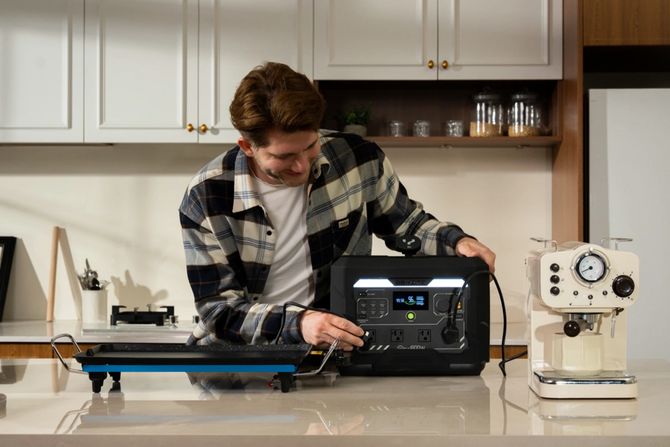
For most short trips with moderate device use, a 1024Wh power station can carry the full load without any solar input at all. At that capacity, a 12V fridge running overnight, interior LED lighting, a CPAP machine, and simultaneous charging for phones and a laptop can all run at the same time—provided the power station has enough output ports to support everything without rotating devices in and out.
That last point matters more than it's usually given credit for. A unit with 13 independent output ports means you're never choosing between the fridge and the laptop, or unplugging the CPAP to charge a phone. Everything stays connected, running exactly as it would at home.
Extended Off-Grid Stays (4–7 Days): When Solar Changes the Equation
Past three days without shore power access, solar input is what separates comfortable use from careful rationing.
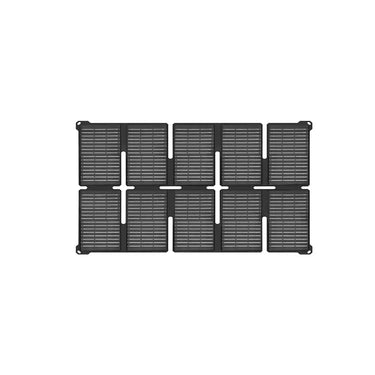
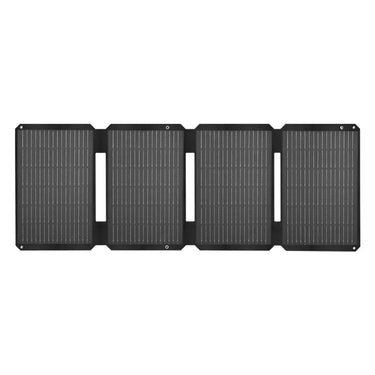
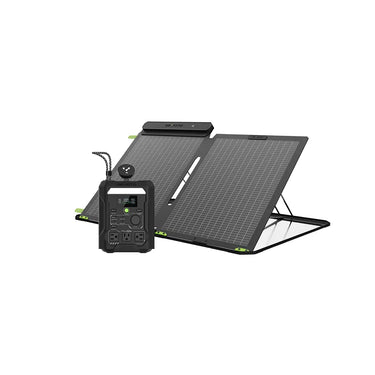
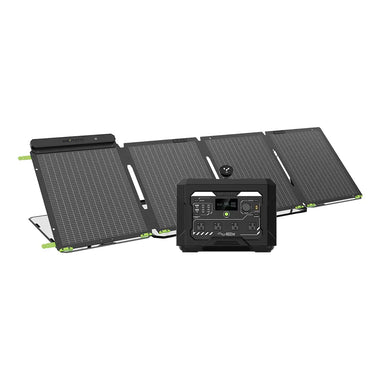
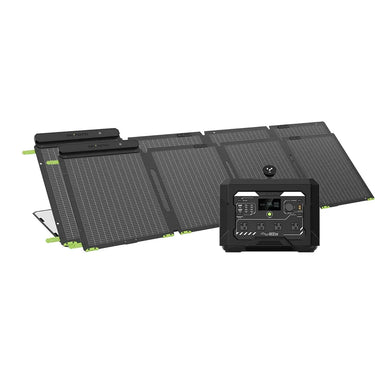
A 200W foldable bifacial solar panel positioned in direct sun can add several hundred watt-hours of recharge throughout a clear day—enough to offset a meaningful portion of moderate daily consumption. Running two 200W panels together, up to the maximum solar input ceiling of the power station, means that on a good sun day in a high-sunlight region like the American Southwest, daily draw and daily recharge can run close to even. The GEYOTO S200's bifacial design captures light from both the front face and reflected light off the ground surface, picking up additional efficiency compared to single-face panels in open terrain.
The GEYOTO N1000 accepts up to 800W of simultaneous solar input, so paired with two S200 panels, you're working close to the system's full solar capacity.

Click the image to shop now
Long-Term Boondocking: Treating Power as a Daily System
Full-time boondocking requires treating energy as a daily variable, not something to address reactively. The goal is a balanced system: solar input during the day roughly matches daily consumption, the battery handles the overnight deficit. That means maximizing panel count toward the station's solar input ceiling, monitoring draw via the companion app, and adjusting usage ahead of cloudy-day forecasts.
Four Ways to Recharge When You're Away from the Grid
Depending on a single charging method creates unnecessary vulnerability. A well-specced portable power station supports multiple input sources, each suited to a different part of your day on the road.
AC Fast Charging: Before You Leave, or When a Plug Is Available
This is your fastest option whenever a standard wall outlet is nearby—at home, a rest stop, a campground with hookups, or a friend's driveway en route. The GEYOTO N1000 reaches 80% capacity in 43 minutes via AC input, and full charge in 68 minutes. For RVers who move campsites every day or two, that turnaround speed is genuinely significant: an hour-long stop at a spot with power can take you from low to ready-to-go before you've finished packing up.

Solar Panels: Your Primary Source While Parked
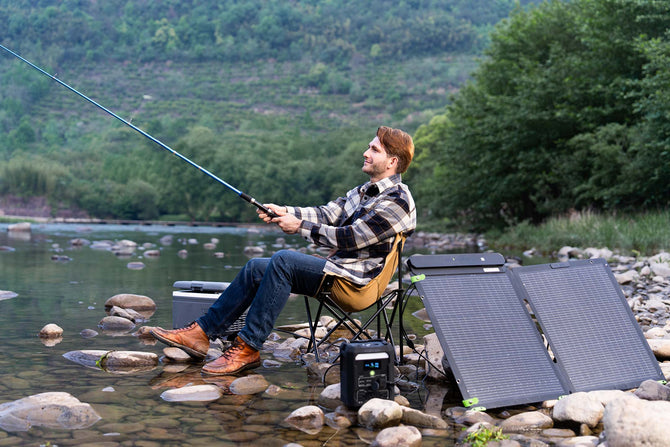
Foldable panels set up around your campsite provide steady, free recharging throughout the day without any active management required. The N1000's built-in MPPT charge controller automatically optimizes input from panels connected in series or parallel. On clear days in sun-rich regions like California, Arizona, or New Mexico, two S200 bifacial panels running at maximum input can keep a moderate-use rig topped up through the next night.
Car 12V Charging: Gain While You Drive
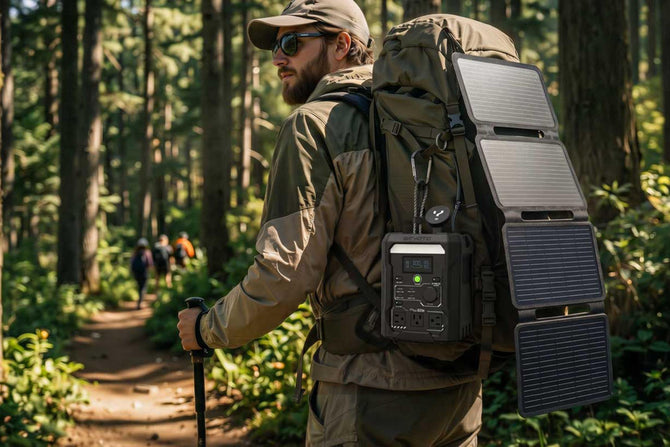
Every mile driven is a charging opportunity. Connecting to the RV's 12V DC port adds continuous input as you travel—not enough to fully recover a depleted unit on its own, but a useful supplement to solar that extends your off-grid window without any additional setup.
Pass-Through Operation: No Need to Wait
You can run devices from the power station while it charges from any input source simultaneously. The fridge stays cold and the CPAP stays powered even when you're topping up via solar or wall AC. The 10ms UPS switchover also means that if you briefly disconnect from a power source, sensitive devices like laptops and medical equipment experience no interruption.
What Should You Actually Look for in an RV Power Station?
The RV environment places specific demands on a portable power station that home backup use doesn't. These are the specs that actually matter when you're sleeping inside the same space as your equipment.
- Pure sine wave output — Sensitive devices, including CPAP machines, laptop chargers, and most modern electronics, require clean, stable AC. A 1800W pure sine wave output with 2400W in constant power mode handles both everyday and higher-draw appliances without compatibility issues.
- LFP battery chemistry — LiFePO4 cells don't emit fumes or require ventilation, making them safe for use inside a closed RV interior overnight. Rated at 4,000+ charge cycles, they're also designed for years of regular use rather than a few seasons.
- Quiet operation — Campgrounds have noise rules. A power station that runs silently passes no disruption through your rig's walls to neighboring campers, and lets you sleep next to it without earplugs.
- Simultaneous multi-port output — Running a fridge, CPAP, laptop, and phone chargers at once requires enough ports that nothing gets left out. A unit with 13 independent output ports—including USB-C, USB-A, and AC outlets—eliminates the need for a separate surge strip.
- Fast AC recharge — For mobile campers, getting from near-empty to departure-ready in under 70 minutes changes what's possible on a short stop.
- High solar input ceiling — A 200W or 400W solar input cap limits how fast you recover power from panels. An 800W ceiling means two 200W panels work at full efficiency without the station becoming the bottleneck.
- UL certification and BMS protection — Safety certification and a built-in battery management system covering overcharge, over-discharge, overload, and temperature control matter especially when the unit runs unattended overnight.
Five Habits That Stretch Your Battery Further Off-Grid
None of these require any additional gear—just some awareness:
- Switch remaining incandescent bulbs to LEDs. The wattage difference is small per bulb, but noticeable across a full evening.
- Use a 12V-native compressor fridge rather than running a standard cooler through an AC inverter. Every conversion step loses energy.
- Turn off circuits and devices not in active use. Idle draw across multiple accessories adds up over a full day.
- Run high-wattage appliances like a coffee maker during peak solar hours, not in the evening when you're drawing down overnight reserves.
- Start every multi-day off-grid stretch with a full charge. A 43-minute AC top-up before leaving a town with hookups changes your margin meaningfully.
Setting Up the Right System for Your RV
The appropriate setup depends on how you actually camp. For weekend trips with moderate device use, the GEYOTO N1000's 1024Wh capacity and 13 simultaneous output ports handle a full RV load—fridge, CPAP, lighting, and device charging—without any solar panel required. For four to seven days off-grid, pairing it with one or two S200 bifacial solar panels brings daily recharge into balance with daily consumption. For extended boondocking or full-time living, running two S200 panels up to the 800W solar input ceiling gives the system its best chance at genuine energy independence, day after day.

Click the image to shop now
The N1000 runs on LFP chemistry rated for 4,000+ cycles, outputs 1800W pure sine wave AC with 2400W in constant power mode, charges from 0 to 80% in 43 minutes, and is UL certified for safe indoor use. It comes with a 3-year standard warranty, with an additional 2-year extension available through GEYOTO member registration—5 years total.
The N1000 power station, S200 bifacial solar panels, and bundled solar generator kits are available at geyoto.com.


