

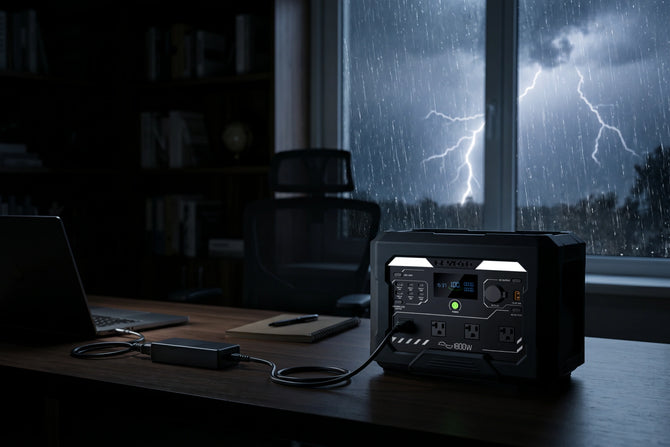




Portable Power Stations for Home Backup: Why Smart Homes Choose GEYOTO
Gas generators are no longer the only option for severe weather and unexpected blackouts. Many modern households are transitioning to clean, emission-free energy storage solutions. We engineered the GEYOTO battery power station to offer a quieter, lower-maintenance alternative to traditional generators, with an immediate backup power source for essential household devices.

Click the image to shop now
Designed for Extreme Storm, Hurricane, and Grid Outage Preparedness
When a severe storm or hurricane cuts the main grid, every second counts. Our systems provide an indoor-friendly alternative to gas units without producing carbon monoxide, requiring stored fuel, or creating disruptive engine noise during battery operation.
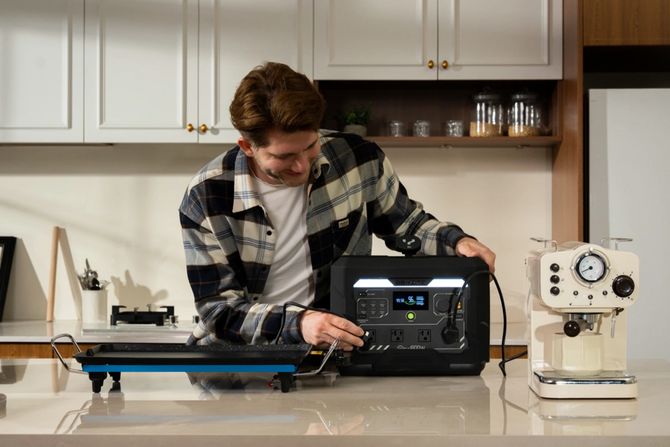
Instant Indoor Deployment: Zero combustion fumes and emissions mean you can operate the unit inside your living room or home office when it is placed on a stable, dry surface with sufficient ventilation.
Lower Maintenance Friction: No pull cords, engine oil changes, spark plugs, or frantic trips to the gas station during a local emergency. The battery should still be charged, stored, and maintained according to the product manual.
Reliable Emergency Power: Built to deliver stable electricity for compatible appliances when local infrastructure fails, provided the connected loads remain within the unit’s output and operating-temperature limits.
The Smart Home Advantage: While a gas generator requires manual setup, fueling, and outdoor operation during storm conditions, a GEYOTO home battery backup can remain charged indoors, ready to protect essential household devices when the lights flicker.
Engineered for High-Demand Home Appliances: Power Output vs. Storage Capacity
When the grid goes down, you need a home battery backup that handles both continuous running power and brief startup surges. Understanding the balance between power output, measured in watts, and storage capacity, measured in watt-hours, ensures you do not overload your system when running critical equipment.
We engineer our systems to bridge this gap, delivering high continuous wattage paired with practical battery capacity to help keep essential household devices running.
Pure Sine Wave AC Outlets and Startup Power
Household appliances with compressors or motors—such as refrigerators, freezers, and some sump pumps—may require a brief surge of power when they turn on.
Our units feature pure sine wave inverters designed to provide clean, stable electricity similar to utility-grid power. This helps support compatible sensitive electronics and household appliances without exposing them to the irregular power waveforms associated with some conventional generators.
Before connecting a refrigerator, pump, air conditioner, heater, or other high-draw appliance, compare its running wattage and startup requirement with the power station’s continuous output and applicable Constant Power rating.
If you are trying to determine exactly how much output and capacity your household requires for sudden outages, check out our comprehensive guide on battery backup for hurricane power outages.
Long-Lasting LiFePO4 Battery Technology
At the core of every GEYOTO battery power station is LiFePO4 battery technology. We choose lithium iron phosphate backup batteries because they are designed for longevity, stability, and repeated use.
Extended Lifespan: Rrated for 4,000+ battery cycles. Actual battery life depends on charging frequency, storage conditions, operating temperature, depth of discharge, and the types of devices being powered.
Thermal Stability: LiFePO4 chemistry is known for strong thermal stability compared with many conventional lithium-ion chemistries. The battery should still be operated and stored according to the temperature, ventilation, and moisture requirements in the product manual.
Cost Efficiency: A longer cycle life may reduce replacement frequency and lower the long-term cost of ownership for households that use backup power regularly.
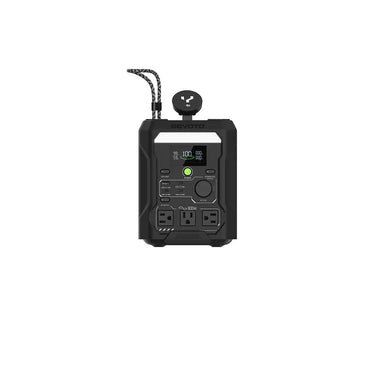
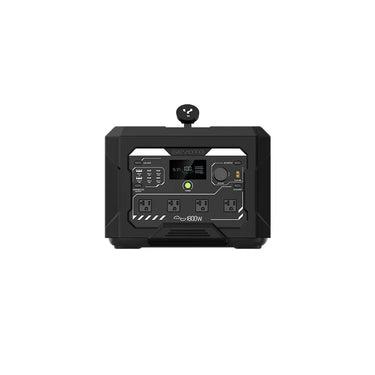
The N1000 combines a 1,024Wh LiFePO4 battery with 1,800W pure sine wave output, 2,400W Constant Power, and 4,000+ battery cycles.

Click the image to shop now
UPS Backup Functionality
A reliable emergency power supply should not require you to search for cables in the dark after a blackout begins. The GEYOTO N1000 provides 10ms UPS switching. When the unit is connected between a wall outlet and compatible equipment, it can automatically transfer supported devices to battery power during a grid interruption.
This rapid transfer can help routers, desktop computers, security equipment, and other compatible electronics remain powered during brief outages.
Individual equipment may have different transfer-time and power-quality requirements. Confirm compatibility before relying on the system for medical devices, servers, or other mission-critical equipment. A portable power station should not replace a medically certified backup system unless the medical-device manufacturer has approved the setup.
What Can a GEYOTO Power Station Run During an Outage?
When the grid goes dark, you need to know what your emergency power supply can realistically handle. We engineered GEYOTO portable power stations to reduce guesswork during critical moments.
Whether you are facing a brief rolling blackout or prolonged storm recovery, our systems deliver clean, immediate energy for compatible household electronics and appliances.
Instead of dealing with the noise and combustion exhaust of a traditional generator, a battery power station can operate indoors to support selected essential devices. To help you plan your emergency readiness, we put together a practical performance breakdown showing how the GEYOTO N1000 manages typical household electronics and appliances.

Click the image to shop now
Real-World Appliance Runtime Matrix
The actual duration of your backup battery for home use depends on the power draw of the connected devices. The following estimates are based on the N1000’s 1,024Wh battery capacity and assume that each load is used separately.
| Appliance Type | Average Power Consumption | Estimated N1000 Runtime or Charges | Emergency Necessity Level |
|---|---|---|---|
| Smartphone | Typical 15Wh-18Wh battery | About 45-55 full recharges | Critical-Communication |
| Wi-Fi Router and Modem | 15W-25W | About 33-55 hours | Critical-Information |
| CPAP Machine | 40W-60W | About 14-20 hours | Critical-Medical Needs |
| Full-Sized Refrigerator | 100W-200W average load | About 4-8 hours of equivalent continuous operation | High-Food Preservation |
| LED Home Lighting | 30W total | About 27 hours | High-Safety and Visibility |
| Laptop or Workstation | 60W-90W | About 9-14 hours of active use | Medium-Remote Work |
| Microwave or Coffee Maker | 1,000W-1,500W | About 33-49 minutes of total operation | Medium-Hot Food and Drinks |
Actual results vary with device efficiency, battery condition, ambient temperature, compressor cycling, conversion losses, and the number of devices operating at the same time.
Refrigerators cycle on and off rather than drawing their listed power continuously. The actual elapsed backup time may therefore be longer than the equivalent continuous-load estimate. Refrigerator efficiency, room temperature, thermostat setting, food load, and door-opening frequency can all affect the result.
CPAP power consumption also varies according to the machine, pressure setting, heated tubing, and humidifier use. Always check the equipment label and the manufacturer’s backup-power recommendations.
For a deeper look at specific appliances, you can check out our refrigerator and CPAP runtime guide to see how the N1000 performs under different loads.
Pro Tip: When compatible equipment supports direct USB-C or DC power, using those outputs may reduce some of the energy lost through AC conversion. The actual improvement depends on the device, voltage, cable, and charging method.
Scalable Backup Planning: Solar Generator Kits
When you are preparing your home for extended blackouts, a single battery charge may not cover the entire outage. Our solar generator options provide an additional way to recharge your power station when utility electricity is unavailable.
Solar panels do not increase the N1000’s built-in 1,024Wh battery capacity. Instead, they replenish stored energy during daylight hours, helping extend practical backup availability when sunlight and weather conditions are favorable.
Solar Generator Kit Options
GEYOTO offers flexible N1000 configurations for different backup and recharging needs.
N1000 Base Unit: The 1,024Wh power station provides 1,800W pure sine wave output and 2,400W Constant Power for compatible appliances.
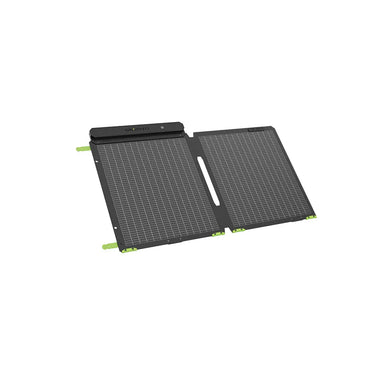
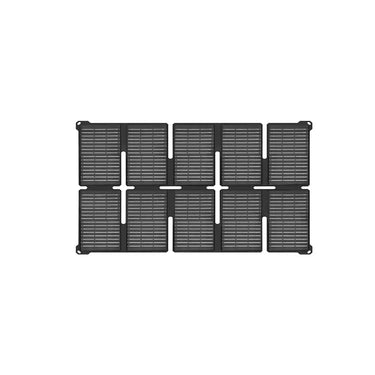
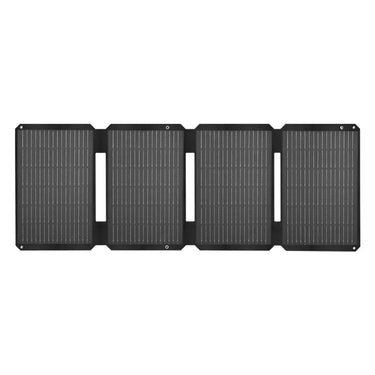
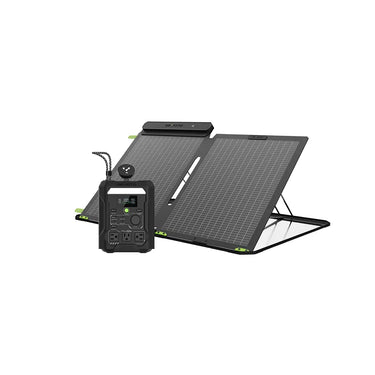
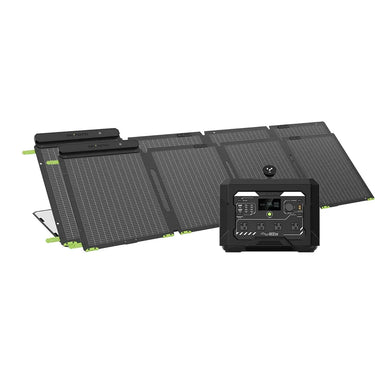
N1000 with One 200W Panel: A balanced option for households that want portable daytime solar recharging during outages or off-grid use.
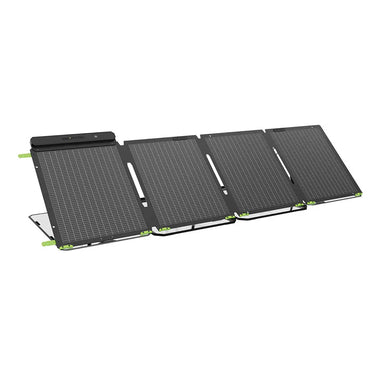
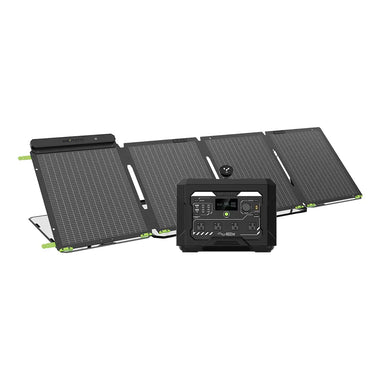
N1000 with Two 200W Panels: A 400W panel setup provides more potential solar input under similar sunlight conditions, helping replenish the battery faster than a single 200W panel.

Click the image to shop now
The N1000 supports up to 800W of compatible solar input. Actual solar performance depends on connected panel wattage, sunlight, temperature, shading, panel angle, geographic location, and the amount of power being used while charging.
High-Efficiency Solar Recharging Pathways
Off-grid backup depends on how effectively you can replenish the battery. Our solar generator kits convert sunlight into usable household energy, giving you another charging option when utility power is unavailable.
To get the most out of your setup, choosing the right panel configuration is important. You can check out our detailed portable power station buying guide to understand how watts, watt-hours, and solar input work together.
Compatible Solar Input: The N1000 accepts compatible solar input within its published voltage and wattage limits, with support for up to 800W.
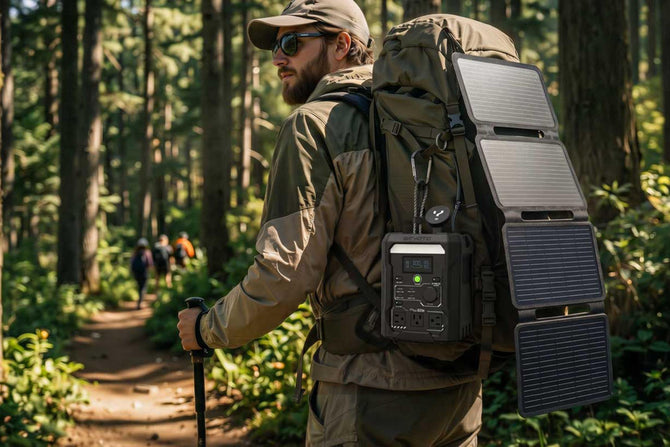
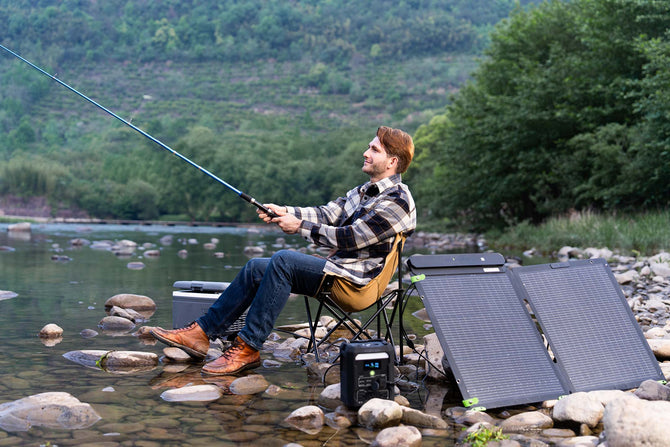
Portable Deployment: Pair your station with foldable GEYOTO solar panels designed for temporary home backup, camping, RV travel, and off-grid use.
Fuel-Free Recharging: Solar charging provides a quiet recharging pathway without gasoline, engine exhaust, or fuel storage.
Solar charging is variable rather than continuous. Cloud cover, shade, panel temperature, sun angle, and weather conditions can reduce real-world output below the panel’s rated wattage.
Versatile Charging Methods
Waiting for a battery to recharge during an emergency can limit your backup plan. We engineered our systems with several charging pathways to help you adapt to the available power source.
| Charging Method | Best Used For | Charging Profile |
|---|---|---|
| AC Wall Outlet | Pre-storm preparation or brief grid restoration | Fastest and most predictable |
| Compatible Solar Panels | Daytime off-grid recharging | Dependent on sunlight and panel setup |
| 12V Car Charger | Evacuation or on-the-go replenishment | Convenient but generally slower |
| Gas or Diesel Generator Through AC Charging | Extended emergencies with limited solar | Requires outdoor generator operation |
The GEYOTO N1000 recharges from 0% to 80% in approximately 43 minutes and reaches a full charge in approximately 68 minutes through supported AC charging. Actual charging results may vary with battery condition, temperature, input power, and simultaneous device use.
Solar charging time does not have one fixed value. It depends on the number and wattage of the connected panels, available sunlight, panel angle, shading, temperature, and whether the N1000 is powering devices while charging.
GEYOTO portable power stations also support pass-through charging, allowing compatible equipment to remain connected while the power station is being recharged.
Complete Control and Advanced BMS Safety Protection
When it comes to backup battery use, raw power means little without control and protection. We engineered our portable power stations to combine built-in battery monitoring with practical operating controls.
The GEYOTO Intelligent Battery Management System
At the core of every GEYOTO battery power station is an intelligent Battery Management System. This system monitors key operating conditions, including voltage, current, and temperature.
The BMS provides protection against:
- Overcharging
- Over-discharging
- Overloading
- Excessive temperature
These protections help support stable operation and battery longevity when the power station is used within its published specifications. Users must still keep the unit dry, maintain adequate ventilation, connect compatible appliances, and follow the charging and operating instructions.
Smart App Integration
Managing your home battery backup should not require standing next to the unit throughout an outage. The GEYOTO app provides real-time monitoring and remote-control functions for compatible power stations.
Real-Time Monitoring: Track available battery information and current input and output power.
Remote Control: Manage supported power-station functions through the app.
Device Settings: Adjust available operating settings according to the model, firmware, and app version.
The N1000 supports Wi-Fi connectivity and one-touch app management for energy monitoring and remote control.
Ergonomic Layout and Output Port Design
We designed the physical layout of our portable power stations with practical, real-world usability in mind. The front-facing interface provides clear battery and operating information based on the current input and output load.
Essential outputs are grouped for quick access during a power outage. The N1000 provides 13 output ports, including four USB-C and two USB-A ports, along with AC, DC, vehicle, and wireless charging options.
Its foldable Qi2.2 wireless charging pad supports compatible phones, while its high-output USB-C ports support compatible laptops and mobile devices. Integrated handles make the unit easier to reposition wherever backup power is needed.
Choosing the Right Home Battery Backup: Frequently Asked Questions
When preparing for severe weather or unexpected grid failures, choosing the right portable power station for home backup comes down to understanding how the technology fits your household’s actual needs.
We have gathered common questions to help you make a more informed decision before the next storm arrives.
Can I Use a Portable Power Station Indoors During a Storm?
Yes. Unlike traditional gas generators, which produce carbon monoxide and must remain outdoors, a GEYOTO battery power station does not create combustion fumes or emissions during normal battery operation.
Use it indoors on a stable, dry surface with sufficient airflow. Keep it away from standing water, leaking windows, bedding, curtains, direct heat, and materials that could obstruct the ventilation openings.
Battery power stations contain electrical and battery components, so they should always be operated according to the product manual.
What Is the Difference Between Running Watts and Starting or Surge Watts?
Understanding this difference helps prevent you from overloading your emergency battery backup system.
Running Watts—Continuous Power: The steady electricity an appliance needs to keep operating after it starts.
Starting or Surge Watts—Initial Power: The brief burst of extra power required to start motorized appliances such as refrigerators, air conditioners, freezers, and sump pumps.
Our pure sine wave AC outputs are designed to support compatible appliance startup loads, provided both the running wattage and startup demand remain within the unit’s applicable output limits.
How Long Can a Battery Power Station Run a Full-Sized Home Refrigerator?
A typical full-sized refrigerator may average between 100W and 200W while operating, but its compressor cycles on and off throughout the day.
| Refrigerator Average Load | Estimated N1000 Equivalent Continuous Runtime | Typical Use Case |
|---|---|---|
| 100W | About 8.2 hours | Efficient refrigerator with limited door opening |
| 150W | About 5.5 hours | Practical mid-range planning estimate |
| 200W | About 4.1 hours | Older or higher-consumption refrigerator |
These are equivalent continuous-load estimates. Because a refrigerator compressor cycles, actual elapsed backup time may be longer.
Results vary according to refrigerator efficiency, room temperature, food load, door-opening frequency, thermostat settings, and the number of other devices connected to the N1000.
If you are trying to calculate your exact needs for critical appliances, check out our comprehensive best home emergency generator guide for outages and storms.
Can GEYOTO Power Stations Be Wired Directly Into My Home Circuit Breaker Panel?
GEYOTO portable power stations are primarily designed to power appliances through their onboard AC, USB, DC, vehicle, and wireless outputs.
Any connection to household wiring requires appropriately rated inlet and transfer equipment. A licensed electrician must confirm that the power station, transfer switch or breaker interlock, circuit load, grounding arrangement, and local electrical requirements are compatible.
Never connect a generator or portable power source to household wiring through a standard wall outlet. Backfeeding can energize utility lines, injure electrical workers, damage equipment, and create fire or electrocution hazards.
How long does it take to fully charge a portable power station?
Recharge speed depends on the input source, connected panel wattage, environmental conditions, battery status, and whether equipment is drawing power during charging.
Wall Outlet—AC Charging: The N1000 recharges from 0% to 80% in approximately 43 minutes and reaches 100% in approximately 68 minutes.
Solar Panels—DC Charging: Solar charging time varies. The N1000 accepts up to 800W of compatible solar input, while available GEYOTO kits include one 200W panel or two 200W panels. Actual charging speed depends on sunlight, panel angle, shading, temperature, weather, and simultaneous power use.
12V Car Charging: Vehicle charging provides a useful option during evacuation or road travel but is generally slower than AC wall charging.

Click the image to shop now
The GEYOTO Assurance: U.S. Warranty and Customer Support
Investing in a portable power station for home backup is about more than buying hardware. It is also about securing dependable product support when the grid fails.
We back our engineering with warranty coverage and customer-support resources designed for eligible U.S. customers.
The GEYOTO Assurance: North American Support & Extended Warranty
Industry-Leading Warranty Coverage & Certifications
We build our systems for repeated use, using LiFePO4 cells and built-in battery protection for home backup, outdoor use, and emergency preparation.
Comprehensive Protection: GEYOTO portable power stations include a three-year standard limited warranty. Members who complete the required registration may receive an additional two-year extended warranty, providing up to five years of total coverage.
Portable solar panels include a one-year standard warranty, with an additional two-year extended period subject to registration.
Safety and Battery Protection: GEYOTO portable power stations use LiFePO4 battery chemistry and built-in BMS protection. Model-specific safety information and certification details should be checked on the applicable product label, manual, and official product documentation.
Customer Support: Our support team assists eligible customers with product troubleshooting, technical questions, and warranty claims according to the terms of the GEYOTO Limited Warranty Policy.
The limited warranty applies to eligible products purchased and used in the United States. Standard coverage is provided in the contiguous United States. Customers in Alaska, Hawaii, Puerto Rico, Guam, the U.S. Virgin Islands, and other U.S. territories may be responsible for shipping and handling costs.


