

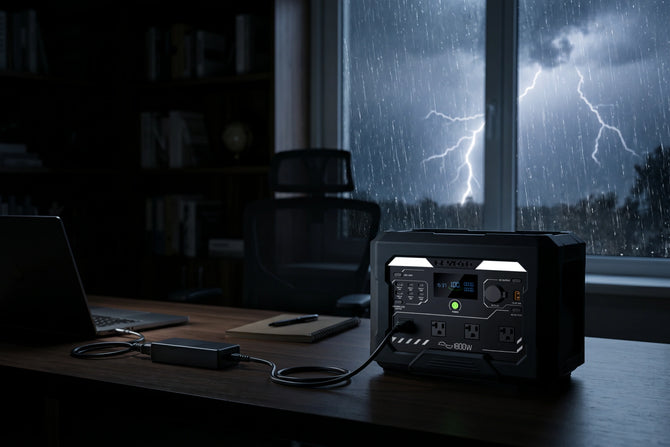




When a hurricane knocks out the grid, "what size generator do I need" is really two smaller questions: how many watts do your appliances draw at once, and how many watt-hours of stored energy do you need to keep them running. Get those two numbers right and the rest of the decision is simple. For most households, that decision no longer starts with a gas can. A battery-based portable power station charges from a wall outlet before the storm and from solar panels after it, runs safely indoors, and needs zero maintenance between hurricane seasons.
Before hurricane season arrives, list your actual must-run appliances and their wattage, keep your power station charged to 80–100%, and test your solar recharge setup once so you're not learning it mid-storm.

Click the image to shop now
Selection Guide
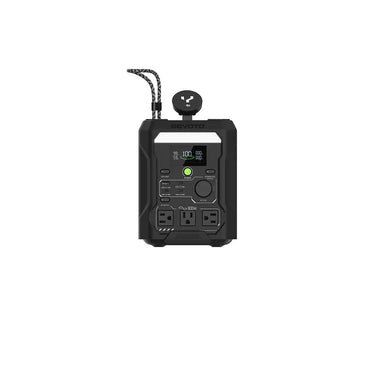
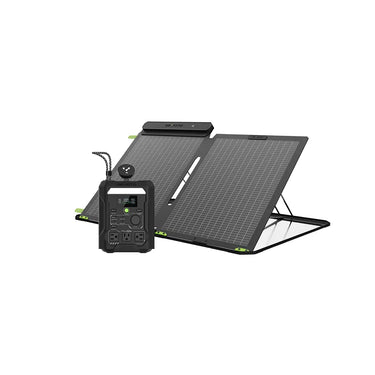
- Choose the N300 (256Wh/300W) for phones, laptops, a router, LED lighting, and short outages — ideal for apartments, evacuation kits, or as a lightweight backup for a single room.


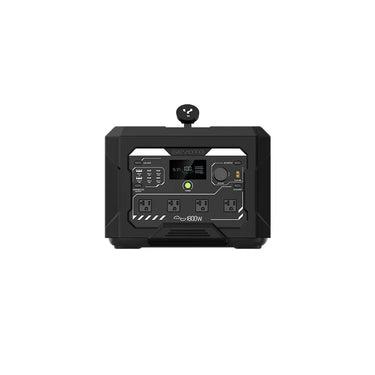
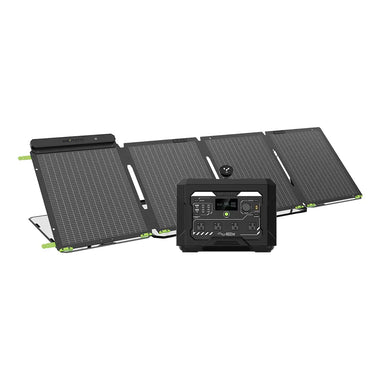
- Choose the N1000 (1024Wh/1,800W–2,400W) when your list includes a refrigerator, CPAP machine, fans, and connectivity together — the tier that covers most hurricane households.
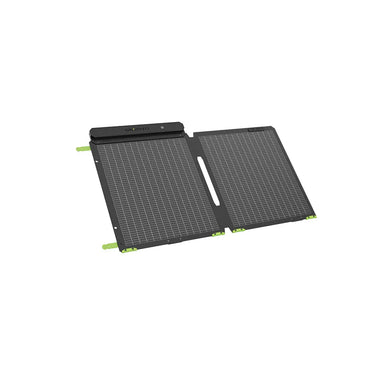
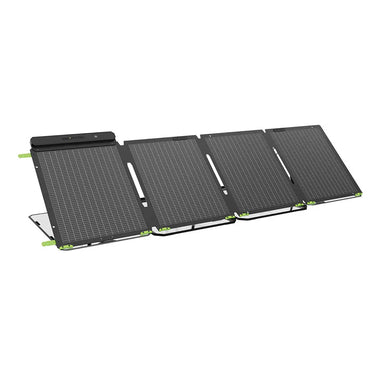
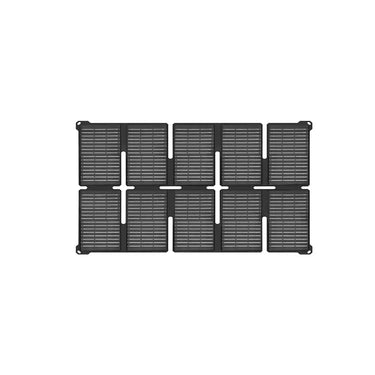
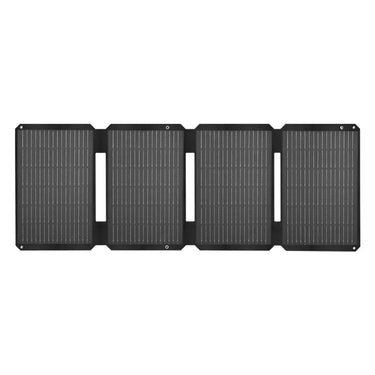
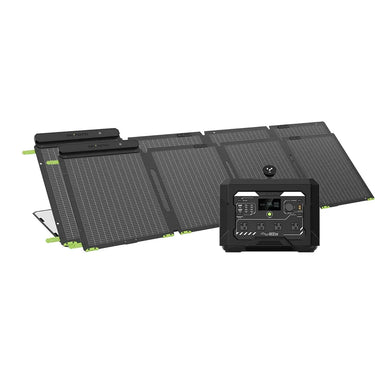
- Add an S100, S200, or dual S200 solar panel when you need to stretch coverage across a multi-day outage without relying on grid power returning.

Running Watts, Starting Watts, and Watt-Hours
Running watts are the steady power an appliance draws while operating. Starting watts (or surge watts) are the brief spike a motor or compressor needs to start — refrigerators, fans, and pumps all have one. Watt-hours (Wh) describe stored energy: how long a battery can sustain a given load, not how much it can power at once.
A portable power station has two ratings that matter together: its continuous output in watts (what it can run at any given moment) and its battery capacity in watt-hours (how long it can keep running before you need to recharge). GEYOTO's own runtime estimates build in roughly a 15% conversion loss, so real-world runtime is always a little shorter than a simple capacity-divided-by-load guess.
In practice, that means a 1024Wh N1000 running a 100W load runs for roughly 8–9 hours, and a 10W device (a router, for example) can run for 80+ hours on a single charge. A 256Wh N300 running a 60W laptop lasts about 3–4 hours; a 10W device runs for around 20 hours.
Hurricane Power Station Sizing Chart
| Capacity Tier | What It Can Realistically Power | Best Fit | GEYOTO Model |
|---|---|---|---|
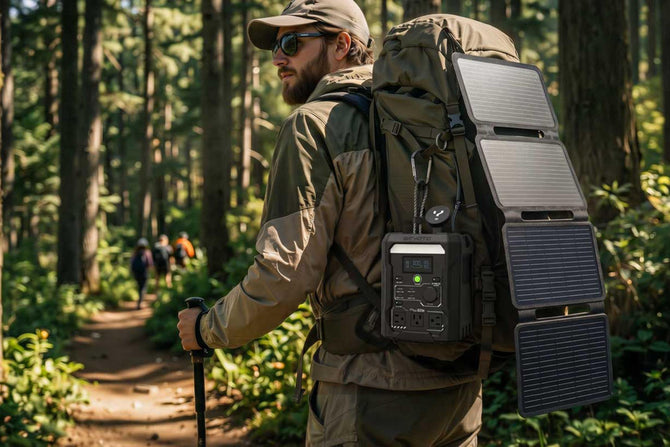
| Under 300W / 256Wh | Phones (15–20 charges), laptops (3–5 charges), LED lights, WiFi router, cameras/drones, a small fan | Evacuation kits, apartments, single-room backup, grab-and-go power | N300 Portable Power Station |
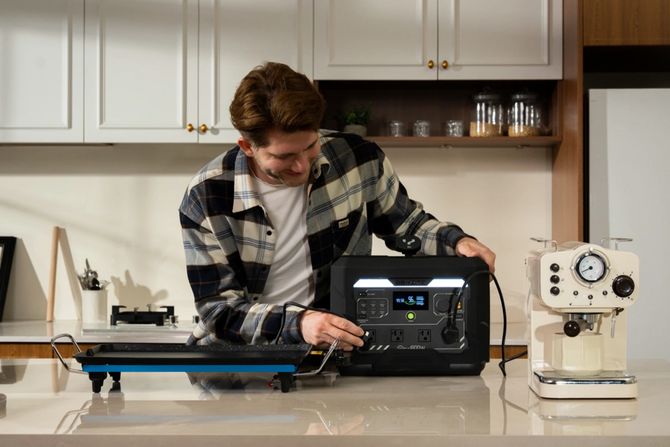
| Up to 1,800W (2,400W Constant Power) / 1,024Wh | Refrigerator or mini fridge, WiFi router, lights, CPAP machine, fans, laptops/TV, and short-burst use of a microwave | Whole-household hurricane essentials — the tier most homes actually need | N1000 Portable Power Station |
| 1,024Wh + 200–400W solar | Everything the N1000 runs, recharged during daylight so a multi-day outage doesn't end with a dead battery | Extended or multi-day outages, off-grid recharging | N1000 Solar Generator Kit (with S200 or 2×S200 panels) |
These are planning ranges, not guarantees. Always check the running and starting wattage printed on your specific appliance before relying on any backup power source for it.
Why Square Footage Doesn't Determine the Size You Need
A 1,200-square-foot apartment can need less backup power than a 3,000-square-foot house, or vice versa — it depends entirely on which appliances you decide must stay on. A renter who only needs a router, a lamp, and a phone charger has very different needs from a homeowner protecting a refrigerator and a CPAP machine.
Start with an appliance list, not a floor plan. Decide what must run continuously (refrigerator, medical devices, WiFi) and what can be used one at a time (microwave, power tools, hair dryer). That list — not your home's square footage — determines whether a 256Wh or 1024Wh unit is the right fit.
Matching Your Appliance List to a Size
There are really two checks to run, and neither needs a spreadsheet.
For anything you plan to run at the same time, add up their running watts and make sure the total — plus the surge from the single largest motor or compressor on your list — stays comfortably under the station's rated output.
For how long you need that list to run, think in watt-hours instead of watts: roughly, how much each appliance draws multiplied by how many hours you need it running, added up across everything on your list.
Take a refrigerator averaging around 120W, a WiFi router at 15W, some LED lighting at 20W, and a CPAP machine at 60W, all running overnight for about 10 hours. That combination adds up to a little over 2,000 watt-hours — roughly two full charges of an N1000 in a single day. That's exactly the gap the N1000 Solar Generator Kit is meant to close: a 200W panel recharging during the day can offset a meaningful share of that daily draw, so you're not stuck waiting by a wall outlet that may not have power anyway.
Common Appliance Wattage (Check Your Own Labels for Final Sizing)
- Refrigerator or mini fridge: about 100W–300W running, plus a startup surge — full-size side-by-side units draw more and should be measured individually.
- CPAP machine: about 40W–80W.
- WiFi router and modem: about 15W–40W.
- Portable fan: about 40W–100W.
- LED lighting: 5W–20W per fixture.
- Laptop: 45W–100W.
- Smartphone: 5W–20W while charging.
- Microwave: about 1,000W–1,500W input power, used in short bursts rather than continuously.
Use your own appliance's label, manual, or a plug-in watt meter for final sizing — published averages are a starting point, not a substitute for your specific model.
GEYOTO N300 vs N1000: Which One Matches Your Hurricane Plan?
| Spec | N300 | N1000 |
|---|---|---|
| Capacity | 256Wh (LiFePO4) | 1,024Wh (LiFePO4) |
| Continuous output | 300W pure sine wave / 550W Constant Power | 1,800W pure sine wave / 2,400W Constant Power |
| Output ports | 9 ports incl. 3 AC, 3 USB-C (65W PD), 25W wireless pad | 18 ports incl. AC, USB-C PD, Qi2.2 25W wireless |
| AC recharge time | ~93 minutes to full | 0–80% in 43 min, full charge in 68 min |
| Solar input | Pairs with the S100 (100W) panel | Up to 800W solar input; pairs with S200 or 2×S200 panels |
| UPS switchover | <10ms | <10ms |
| Cycle life / warranty | 4,000 cycles, 3-year standard + 2-year member warranty | 4,000+ cycles, 3-year standard + 2-year member warranty |
| Best for | Phones, laptops, routers, lights, cameras, short outages, evacuation bags | Refrigerator/mini fridge, CPAP, fans, lights, router, TV — core hurricane essentials |
If you're only protecting a handful of small devices and want something light enough to grab on the way out the door, the N300 covers it at a lower price. If your list includes a refrigerator, a CPAP machine, or you simply want more headroom for a multi-day outage, the N1000 is the one built for that job — it's also GEYOTO's current top-tier model, so there's no larger single unit to "size up" to if the N1000 already covers your list with room to spare.

Click the image to shop now

Click the image to shop now
Extending Runtime with Solar
A portable power station only lasts as long as its stored charge, unless you can recharge it — and during a hurricane, grid power is exactly what you don't have. Pairing an N1000 with an S200 (200W) or two S200 panels (400W total) lets you recharge during daylight hours between storm bands, which is the difference between a battery that dies on day two and one that keeps up with a multi-day outage.
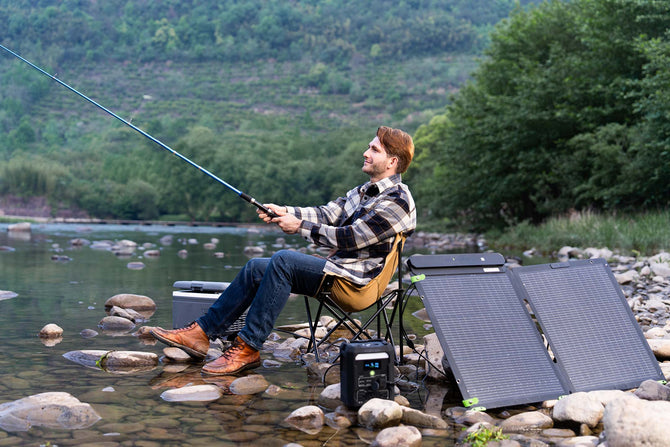
Solar recharging is weather-dependent: expect meaningfully reduced output under heavy cloud cover or rain, and don't count on solar during the storm itself. Treat it as a way to claw back capacity once conditions clear, not as a guaranteed daily top-up. The N300 pairs with the smaller S100 (100W) panel for the same reason, scaled to its 256Wh capacity.

Click the image to shop now
Battery Power Station vs. Fuel Generator
| Factor | GEYOTO Power Station | Fuel Generator |
|---|---|---|
| Charging/power method | Wall outlet, solar panel, or car charger — no fuel required | Gasoline, propane, or diesel |
| Indoor use | Safe indoors per manufacturer instructions — no fumes or emissions | Never safe indoors — produces carbon monoxide |
| Noise | Below 30dB under 500W load (N1000, lab tested) — quieter than a normal conversation | Loud enough to require outdoor placement well away from the home |
| Portability | 25.6 lbs (N1000) or 7.7 lbs (N300), with a carry strap | Often 100+ lbs, harder to move or store |
| Maintenance | None — no oil changes, spark plugs, or fuel stabilization | Regular oil changes, fuel rotation, and test runs required |
| Continuous large loads | Limited to rated output (up to 2,400W Constant Power on the N1000) | Can supply much higher continuous wattage for whole-home circuits |
A fuel generator still has a role for households that need to run central air conditioning, well pumps, or several large appliances at once. But for the refrigerator-router-lights-medical-device tier that covers most hurricane households, a battery power station removes the two biggest fuel-generator risks — carbon monoxide and running out of gas when the stations are empty — while still keeping you powered indoors, quietly, for as long as your outage lasts.

Frequently Asked Questions
Can the N1000 Run a Refrigerator During a Hurricane?
It's built for compact and mid-size refrigerators or a mini fridge, generally delivering several hours of runtime per charge depending on the model's compressor cycling and startup surge. Full-size side-by-side refrigerators draw more power and should be checked against the N1000's rated output and Constant Power mode before you rely on it exclusively. Pairing it with a solar panel extends coverage across a multi-day outage. See our guide on what 1024Wh actually means for home backup for a deeper runtime breakdown.
What's the Difference Between the 256Wh N300 and the 1024Wh N1000? Capacity and power capability.
The N300 is lighter and suited to phones, laptops, routers, and short outages. The N1000 has roughly four times the capacity and six times the continuous output, making it the better fit for a refrigerator, CPAP machine, or a full household essentials list. If you're unsure, size to the wattage of the single largest device you need to run continuously.
Can a Portable Power Station Run Central Air Conditioning or a Well Pump? Generally no.
Central AC compressors and well pumps have startup surges and continuous draws that exceed what a portable power station in this class is designed to deliver. That need falls into fuel or standby generator territory, sized by a licensed electrician — a different product category from a portable power station.
Do I Need One or Two Solar Panels?
One S200 panel (200W) is enough to meaningfully offset daily use on an N1000 in good sun. Two S200 panels (400W total) cut recharge time further and help more if your appliance list runs closer to the N1000's full daily capacity, as in the worked example above. Weather and panel placement both affect real-world output.
Is It Safe to Run a Power Station Indoors Overnight?
Yes, when used according to the manufacturer's instructions and with adequate clearance for airflow. Unlike a fuel generator, a LiFePO4 power station produces no combustion exhaust, which is why it's the safer choice for overnight, indoor, or bedroom-adjacent use during a storm.


